The Ever Evolving Definition of “Racism”? Part 2: Frederick Douglass

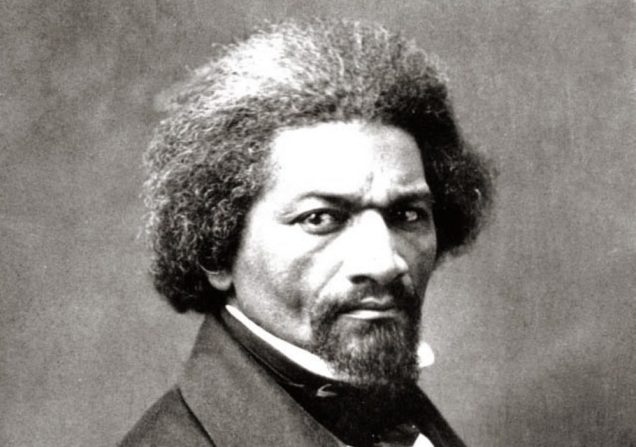
Frederick-Douglass-998x702

[W]hen humanity is insulted and the rights of the weak are trampled in the dust by a lawless power; when society is divided into two classes, as oppressed and oppressor, there is no power, and there can be no power, while the instincts of manhood remain as they are, which can provide solid peace. (Frederick Douglass, “There Was a Right Side in the Late War,” 1878, p. 629)

As we concluded in our last post, abolitionist David Walker (1796 – 1830) saw “color prejudice”—the closest phrase to our own post 1930’s “racism”—as not simply, or even primarily, hatred or dislike of others based on race or color. Nor did he consider it in any sense natural. Rather, it was a presumption of the inferiority of black Americans, a presumption displayed more by the actions and institutions of white men than by their verbal professions. Further, contrary to the thought of many modern Americans, this belief in the inferiority of black Americans was born of the institution of slavery itself, not the cause of the institution. White oppressors sought to distinguish, debase, demean, and “other” those whom they exploited for monetary gain. “Avarice” was the true source of race prejudice, including the dehumanizing justifications it produced. Last, the response of African Americans to these exploitative circumstances—including even hatred—was not itself considered “prejudice” by Walker, given the relation that existed between oppressor and oppressed.

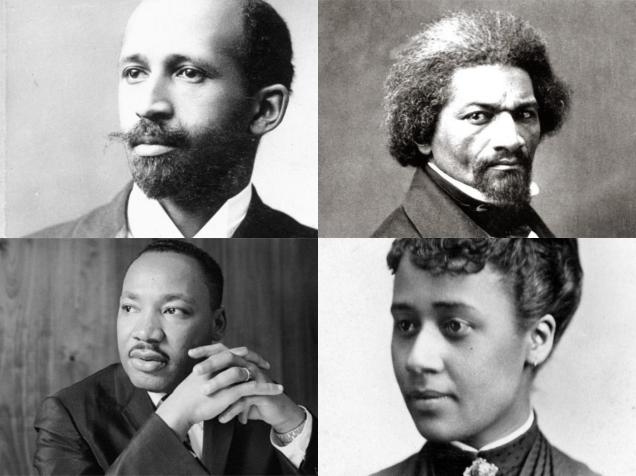
Moving on to Frederick Douglass (1818 – 1895), we see many of the same ideas, though stated even more explicitly. As before, these posts are mostly just quotations from the abolitionists and civil rights advocates under discussion, as the purpose is to demonstrate their own understandings of “color prejudice” and “racism.” The claim is daily made that these definitions have been changed by modern antiracists, specifically by supposed adherents of Critical Race Theory. Over the course of this series, I hope to test this claim.

Continue reading

What Does 1619 Have To Do With 2019? A Crash Course

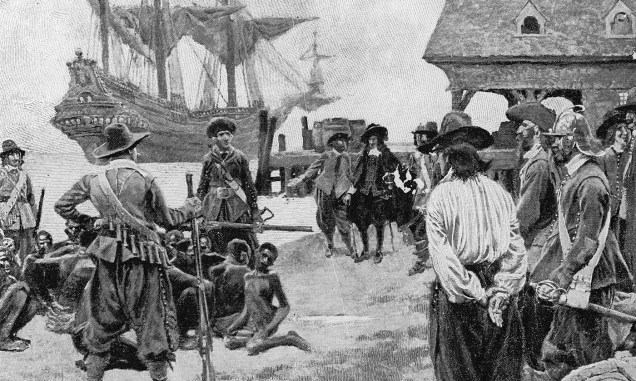
Landing of Negroes at Jamestown.

There is widespread belief that racism and racist ideas as we know them today have been a feature of mankind since the fall of Adam. Many uncritically assume that if anything has significantly changed over the last several centuries, it has been from originally bad to increasingly good. But this is far from the truth. Accurate history reveals, rather, that racist ideas—as we know them in America—have largely been developed as justifications for pre-existing racial exploitation. The Atlantic slave trade was well under way before there even was such a thing as the “Black Race” or the “White Race,” both previously being a host of various nationalities, ethnicities, religions, cultures, languages, and phenotypical features. In fact, before the appearance of the most powerful justifications for exploitation, those of African descent had already become the only people group subject to lifelong servitude, viz., property; they and their children.

Continue reading

Reject the “Trojan Horse,” Invite the Soldiers

Screenshot (7)

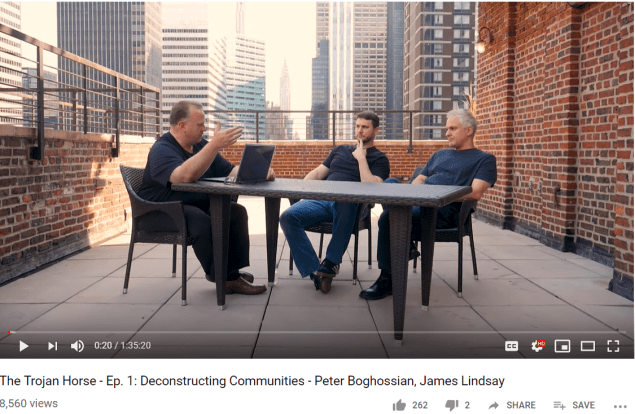
To be honest, though I should not be surprised by anything Sovereign Nations does, I was astonished to see an organization founded by the likes of Michael O’Fallon invite philosopher Peter Boghossian and mathematician James Lindsay to discuss the “Trojan Horse” of anti-Christian ideology supposedly contained in the Southern Baptist Convention’s infamous “Resolution 9” (see, “The Trojan Horse,” Aug. 9, 2019). The stated reasoning is that these men are liberal atheists with expertise in the field, and therefore have no “horse in the race” and are thereby particularly situated to warn against the evils of Critical Race Theory, even as an “analytical tool.”

Forgive me, but I question not only Boghossian and Lindsay’s supposed “expertise” in the field, but also their supposed disinterested standpoint. Even more important, I believe they are substantially incorrect in their assessment.

Continue reading

The Ever Evolving Definition of “Racism”? Part 1: David Walker

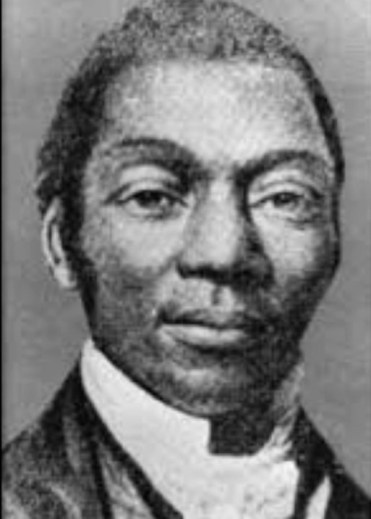
David Walker Image

Christian enslavers did not believe they were prejudiced, segregationists did not believe they were racists, and our current president has declared that he is “the least racist person there is anywhere in the world.” Denying racism of “any form” is an American tradition, in fact, an institution of American life. As people of color increasingly find footing within traditionally white spaces, this institution of denial has evolved with ever greater creativity and robustness.

In our own day, those intent on protecting the institution simply claim that those of the past were indeed prejudiced and racists, but that was…the past. Modern advocates of racial justice, they argue, are simply working from a new definition and understanding of “racism,” a definition which was changed in order to continue “agitation” beyond its necessity. In particular, Critical Race Theory is targeted for having introduced illicit elements into the concept, viz., any elements that go beyond bare personal hatred and/or overt discrimination based on “race.”

Continue reading

Christianity and Critical Theory, Part 3: “Oppressor” and “Oppressed”

oppression 2

One of the more frustrating trends in Evangelicalism is the incessant accusation of “Cultural Marxism” or “Critical Theory,” leveled against any who speak of “oppressor” and “oppressed.” This rhetorical move has insidious historical roots, but seems to have gained currency through wide-spread ignorance of both that which is being criticized and Critical Theory itself. We have sought to dispel this ignorance in the last two posts, clarifying precisely what distinguishes Critical Theory from its competitors. But I want here to likewise expose the absurdity of this further claim, viz., that the theme of “oppressor” and “oppressed” is a distinguishing characteristic of Critical Theory, such that all who appeal to the theme are liable to be lumped into this tradition.

No one denies that this theme is important to Critical Theory; it is, after all, a project of emancipation. But it is only one approach among many—many which likewise affirm the historic and persistent tragedy of human oppression via social institutions and relations.

Continue reading

Constantly Attacking Anti-Racists Gives Defense to White Supremacists in the Church : Slander? Receipts

receipts-1200

Last week I posted the following thread on Twitter, in response to Justin Peter’s indignant request of Beth Moore:

Continue reading

“Whiteness” as Pejorative

White

Just as “Blackness” was cobbled together out of various nations, tribes, tongues, and shades of brown—beginning around the time Gomes De Zurara’s bogus descriptions of African peoples as a beastly lot, in order to justify Prince Henry’s enslaving prowess—so “Whiteness” was cobbled together out of various nations, tribes, tongues, and lighter shades of brown to form the “White Race.” There simply was no such thing as “White People,” the “White Race,” or “Whiteness” as a concept defining distinct people-groups until, really, the turn of the 18th century.

Prior to the development of colonial governments in the Americas, people-groups were largely identified by nationality; there were Irishmen, Englishmen, Germans, Italians, Slavs, Senegalese, Ghanaians, Malians, etc. At the beginning of the 17th century, these men and women worked side by side in the construction of the New World, primarily as indentured servants subject to the term of 6 years under British common law.

Continue reading