The Ever Evolving Definition of “Racism”? Part 1: David Walker

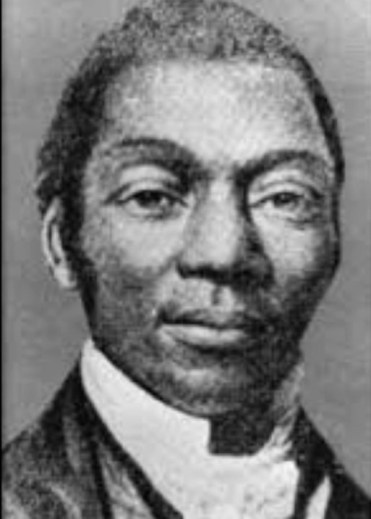
David Walker Image

Christian enslavers did not believe they were prejudiced, segregationists did not believe they were racists, and our current president has declared that he is “the least racist person there is anywhere in the world.” Denying racism of “any form” is an American tradition, in fact, an institution of American life. As people of color increasingly find footing within traditionally white spaces, this institution of denial has evolved with ever greater creativity and robustness.

In our own day, those intent on protecting the institution simply claim that those of the past were indeed prejudiced and racists, but that was…the past. Modern advocates of racial justice, they argue, are simply working from a new definition and understanding of “racism,” a definition which was changed in order to continue “agitation” beyond its necessity. In particular, Critical Race Theory is targeted for having introduced illicit elements into the concept, viz., any elements that go beyond bare personal hatred and/or overt discrimination based on “race.”
Continue reading

Racial Justice is Not “Liberalism”

Machen 2

We reject theological liberalism–defined by J. Gresham Machen in Christianity and Liberalism as a “different gospel” from the Scriptural gospel. (43, 44)

Above is the first “Denial” listed in the “Report of the ad Interim Committee on Racial and Ethnic Reconciliation to the Forty-Sixth General Assembly of the Presbyterian Church in America.” Every time I read this line, I think, “yep,” and keep reading. No alarms.

But as time and debate has continued since its publication and adoption, I’m starting to wonder if many within the Presbyterian and Reformed tradition see this inclusion as a contradiction of the rest of the document, especially among the self-described “Machen Warriors.” I fear that Machen’s personal political and sociological views have been illegitimately folded into his definition of “Liberalism” by modern hagiographers.

Continue reading

Christianity and Critical Theory: A Summary

Critical Art

What follows is a summary of our four-part series, “Christianity and Critical Theory.” I pray it is of some value to the ongoing “social justice” discussion in the Church. Let me know your thoughts.

The Enlightenment and Karl Marx

The central contribution of Karl Marx—that which places him among Weber and Durkheim as the fathers of sociology—is not his specific critique of capitalism, his communist eschatology, nor even his apprehension of the striking social ills of his day, but rather his historical materialist critique of the whole. The Enlightenment era which preceded Marx had sought to throw off the “tyranny” of the Church over ideology and the de facto authority of traditional metaphysics, replacing them with reason and rational justifications and explanations. It was a turn from the transcendent and dictated to the immanent and discoverable. Many had critiqued private property, capitalist markets, oppressive social orders, and the dismal conditions they were thought to produce, but Marx believed they had all failed to grasp their historical causes and preconditions.

Continue reading

Christianity and Critical Theory, Part 4: Is CT Anti-Christian?

post 4 image

In the following, I intend to make good on my promise to evaluate Critical Theory in light of the Scripture. We have already explained the philosophical roots of Critical Theory, from Marx to Frankfurt, worked through the second and third generation Theorists, and identified, according to modern Critical Theorists’ themselves, what uniquely distinguishes Critical Theory from other and similar traditions. In our last post, we addressed the claim that Critical Theory is uniquely identified by the so-called “oppressor/oppressed paradigm,” and found the claim wanting. As we now move into evaluation, I will first give a historical example, though extreme, of an attempt to weld Christianity with Critical Theory, and then proceed to analyze the distinguishing characteristics we have identified in contrast to the Biblical witness of orthodox Christianity. As per usual, it is a bit long, yet still woefully incomplete given the nature of the subject.

Continue reading

Christianity and Critical Theory, Part 3: “Oppressor” and “Oppressed”

oppression 2

One of the more frustrating trends in Evangelicalism is the incessant accusation of “Cultural Marxism” or “Critical Theory,” leveled against any who speak of “oppressor” and “oppressed.” This rhetorical move has insidious historical roots, but seems to have gained currency through wide-spread ignorance of both that which is being criticized and Critical Theory itself. We have sought to dispel this ignorance in the last two posts, clarifying precisely what distinguishes Critical Theory from its competitors. But I want here to likewise expose the absurdity of this further claim, viz., that the theme of “oppressor” and “oppressed” is a distinguishing characteristic of Critical Theory, such that all who appeal to the theme are liable to be lumped into this tradition.

No one denies that this theme is important to Critical Theory; it is, after all, a project of emancipation. But it is only one approach among many—many which likewise affirm the historic and persistent tragedy of human oppression via social institutions and relations.

Continue reading

Christianity and Critical Theory, Part 2: What Makes “Critical Theory” Critical Theory?

Adorno Quote

Behind every work of art is an uncommitted crime. ~Theodore W. Adorno

[This post is a continuation of, “Christianity and Critical Theory, Part 1: Marx and Frankfurt.” (And again, this is not an endorsement of these ideas; critique is forthcoming.)]

From Enlightenment to Critical Theory

In what is considered Critical Theory’s most seminal work, Dialectic of Enlightenment, Max Horkheimer and Theodore W. Adorno critically interrogate the principles, goals, location, and historical effects of the project of Enlightenment. Consistent with the dialectical approach discussed in the last post, they see within the project both the immanent seeds of current human bondage and suffering, as well as the immanent seeds of emancipation therefrom. For Frankfurt theorists in general, social artifacts and systems are not to be analyzed in terms of a-historical transcendent ideologies; rather, they are to be critiqued as the products of contradictory internal forces which produce both the pathologies experienced by its individual actors, as well as the immanent forces of its own dissolution, both of which reside in the tension of existential experience until transformational crisis ensues.

Continue reading

Christianity and Critical Theory, Part 1: Marx and Frankfurt

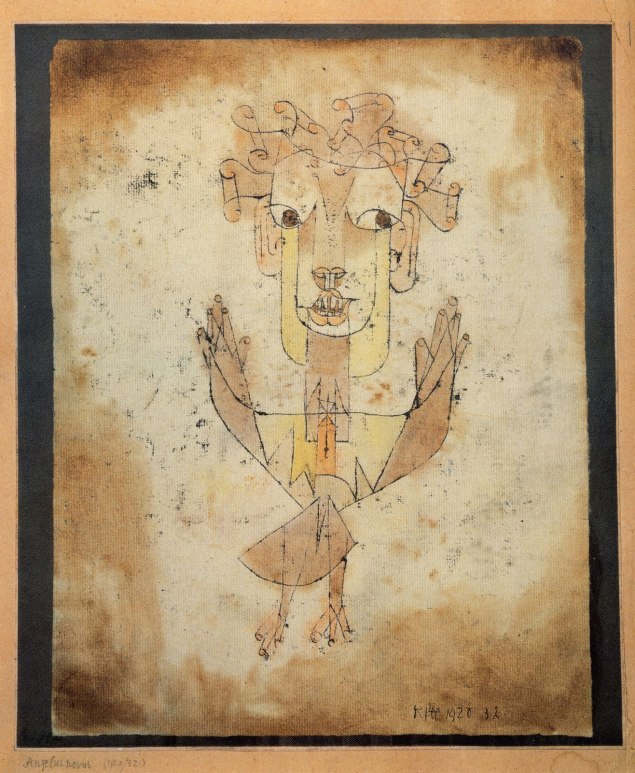
Klee-angelus-novus

His face is turned toward the past. Where we perceive a chain of events, he sees one single catastrophe which keeps piling ruin upon ruin and hurls it in front of his feet. The angel would like to stay, awaken the dead, and make whole what has been smashed. But a storm is blowing from paradise; it has got caught in his wings with such violence that the angel can no longer close them. The storm irresistibly propels him into the future to which his back is turned, while the pile of debris before him grows skyward. This storm is what we call progress. ~Walter Benjamin on Angelus Novus (1920)

Note: In this series, I address Critical Theory proper. For an introduction to Critical Race Theory, please see “In Short, What is Critical Race Theory?,” “What is Critical Race Theory? An Introduction to the Movement and its Ideas (With Further Reading),”or the series beginning here: “The Christian and Critical Race Theory, Part 1: A Survey of the ‘Traditional Civil Rights Discourse’.”

Introduction to Part 1

I have been asked multiple times for my thoughts on Neil Shenvi and Pat Sawyer’s article, “The Incompatibility of Critical Theory and Christianity.” In short, I believe it is a well written article and I am genuinely appreciative of the work they are doing. But what has brought me some discomfort throughout their project is the sense that they are offering a characterization of Critical Theory, rather than a faithful explanation or definition; maybe even a caricature? In particular, treating the identification of “oppressor” and “oppressed” as the definitive core, or premise, of Critical Theory seems more a collocation of a common theme pulled from disparate quotes than that which has (and does) distinguish Critical Theory from its “traditional” competitors. (Edit: For further critique of Neil Shenvi’s faulty characterizations, please see: “Critical Theory, Dr. Levinson, Dr. Shenvi, and Evangelicalism: Final Thoughts.”)

Continue reading

Constantly Attacking Anti-Racists Gives Defense to White Supremacists in the Church : Slander? Receipts

receipts-1200

Last week I posted the following thread on Twitter, in response to Justin Peter’s indignant request of Beth Moore:

Continue reading

The Gospel, the Social Gospel, and Gospel-Only-ism, Part 1: Death and Resurrection?

Peter Pentacost

The Gospel, therefore, is a public exhibition of the Son of God manifested in the flesh, (1 Timothy 3:16) to deliver a ruined world, and to restore men from death to life. It is justly called a good and joyful message, for it contains perfect happiness. Its object is to commence the reign of God, and by means of our deliverance from the corruption of the flesh, and of our renewal by the Spirit, to conduct us to the heavenly glory. For this reason it is often called the kingdom of heaven, and the restoration to a blessed life, which is brought to us by Christ, is sometimes called the kingdom of God… . (John Calvin, Commentary on Matthew, Mark, Luke)

The gospel is the power of God unto salvation. This is Biblically undeniable. But what is the gospel? There appears to be an underlying disagreement among Christians over this definition, fueling charges of both “Social Gospel” from one side and “Gospel-Only-ism” (or the like) from the other. The truth is, both of these systems obscure the true meaning of “gospel”; the former verging on Materialism and the eclipse of the individual, the latter verging on Gnosticism and the eclipse of community. I hope in this short series to offer some clarification, for I too believe that the gospel is the answer to all individual and social ills.

Continue reading

“Whiteness” as Pejorative

White

Just as “Blackness” was cobbled together out of various nations, tribes, tongues, and shades of brown—beginning around the time Gomes De Zurara’s bogus descriptions of African peoples as a beastly lot, in order to justify Prince Henry’s enslaving prowess—so “Whiteness” was cobbled together out of various nations, tribes, tongues, and lighter shades of brown to form the “White Race.” There simply was no such thing as “White People,” the “White Race,” or “Whiteness” as a concept defining distinct people-groups until, really, the turn of the 18th century.

Prior to the development of colonial governments in the Americas, people-groups were largely identified by nationality; there were Irishmen, Englishmen, Germans, Italians, Slavs, Senegalese, Ghanaians, Malians, etc. At the beginning of the 17th century, these men and women worked side by side in the construction of the New World, primarily as indentured servants subject to the term of 6 years under British common law.

Continue reading