The Ever Evolving Definition of “Racism”? Part 2: Frederick Douglass

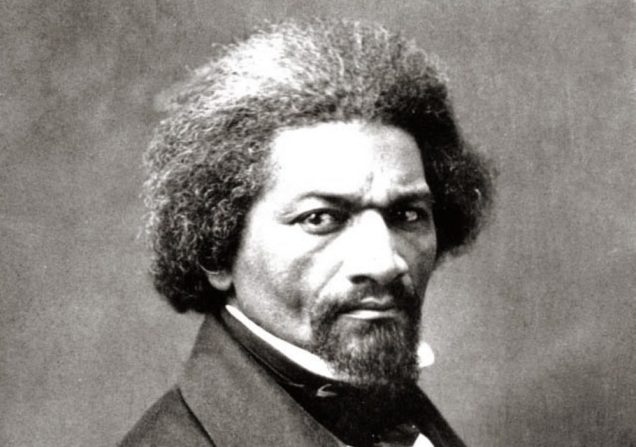
Frederick-Douglass-998x702

[W]hen humanity is insulted and the rights of the weak are trampled in the dust by a lawless power; when society is divided into two classes, as oppressed and oppressor, there is no power, and there can be no power, while the instincts of manhood remain as they are, which can provide solid peace. (Frederick Douglass, “There Was a Right Side in the Late War,” 1878, p. 629)

As we concluded in our last post, abolitionist David Walker (1796 – 1830) saw “color prejudice”—the closest phrase to our own post 1930’s “racism”—as not simply, or even primarily, hatred or dislike of others based on race or color. Nor did he consider it in any sense natural. Rather, it was a presumption of the inferiority of black Americans, a presumption displayed more by the actions and institutions of white men than by their verbal professions. Further, contrary to the thought of many modern Americans, this belief in the inferiority of black Americans was born of the institution of slavery itself, not the cause of the institution. White oppressors sought to distinguish, debase, demean, and “other” those whom they exploited for monetary gain. “Avarice” was the true source of race prejudice, including the dehumanizing justifications it produced. Last, the response of African Americans to these exploitative circumstances—including even hatred—was not itself considered “prejudice” by Walker, given the relation that existed between oppressor and oppressed.

Moving on to Frederick Douglass (1818 – 1895), we see many of the same ideas, though stated even more explicitly. As before, these posts are mostly just quotations from the abolitionists and civil rights advocates under discussion, as the purpose is to demonstrate their own understandings of “color prejudice” and “racism.” The claim is daily made that these definitions have been changed by modern antiracists, specifically by supposed adherents of Critical Race Theory. Over the course of this series, I hope to test this claim.

Continue reading

Reject the “Trojan Horse,” Invite the Soldiers

Screenshot (7)

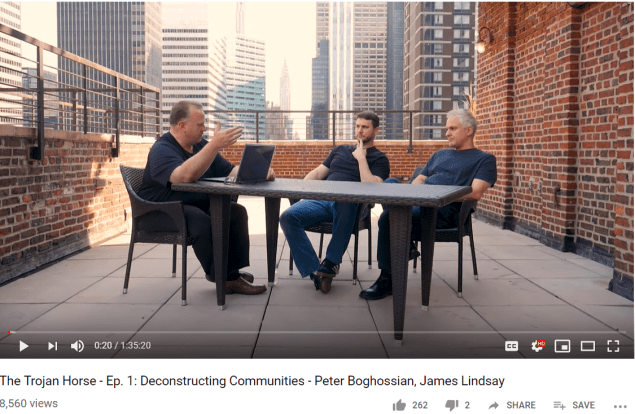
To be honest, though I should not be surprised by anything Sovereign Nations does, I was astonished to see an organization founded by the likes of Michael O’Fallon invite philosopher Peter Boghossian and mathematician James Lindsay to discuss the “Trojan Horse” of anti-Christian ideology supposedly contained in the Southern Baptist Convention’s infamous “Resolution 9” (see, “The Trojan Horse,” Aug. 9, 2019). The stated reasoning is that these men are liberal atheists with expertise in the field, and therefore have no “horse in the race” and are thereby particularly situated to warn against the evils of Critical Race Theory, even as an “analytical tool.”

Forgive me, but I question not only Boghossian and Lindsay’s supposed “expertise” in the field, but also their supposed disinterested standpoint. Even more important, I believe they are substantially incorrect in their assessment.

Continue reading

Christianity and Critical Theory, Part 2: What Makes “Critical Theory” Critical Theory?

Adorno Quote

Behind every work of art is an uncommitted crime. ~Theodore W. Adorno

[This post is a continuation of, “Christianity and Critical Theory, Part 1: Marx and Frankfurt.” (And again, this is not an endorsement of these ideas; critique is forthcoming.)]

From Enlightenment to Critical Theory

In what is considered Critical Theory’s most seminal work, Dialectic of Enlightenment, Max Horkheimer and Theodore W. Adorno critically interrogate the principles, goals, location, and historical effects of the project of Enlightenment. Consistent with the dialectical approach discussed in the last post, they see within the project both the immanent seeds of current human bondage and suffering, as well as the immanent seeds of emancipation therefrom. For Frankfurt theorists in general, social artifacts and systems are not to be analyzed in terms of a-historical transcendent ideologies; rather, they are to be critiqued as the products of contradictory internal forces which produce both the pathologies experienced by its individual actors, as well as the immanent forces of its own dissolution, both of which reside in the tension of existential experience until transformational crisis ensues.

Continue reading