What Is & Isn’t Being Said: 4. “Privilege”; A Parable of Smith & Emerson

Divided by Faith rev

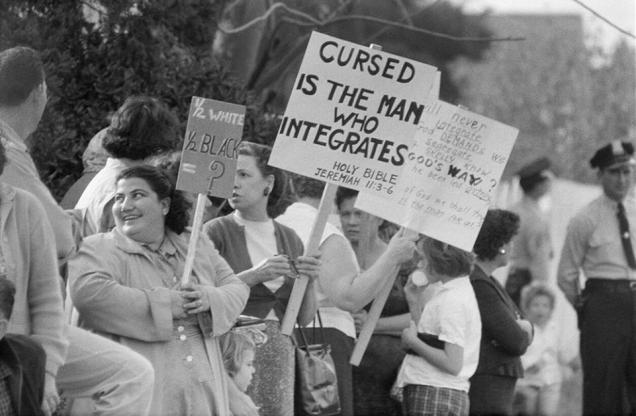
We concluded our last post, “What Is & Isn’t Being Said: 3. ‘White Privilege’,” by stating the importance of recognizing, not only the 400 years long history of racialization in the United States, but also the privilege that white Americans enjoy even today, particularly in relation to black Americans. When one refuses to acknowledge this history and privilege—or simply does not understand it—one tends to propose explanations for current disparities by ahistorical means, illicitly assuming a neutral historical starting point for discussion. Given that the average white person in America does not feel himself to be personally prejudiced, thinks that racism is the sin of a rare few, and believes that all barriers to entry have been removed by Civil Rights legislation, white Americans tend to believe that something must be wrong with the black community itself. If all is thought to be equal (in terms of “access” and privilege), what else is available to explain the vast inequities cited in the previous posts? (Even popular theologians can be found offering explanations such as greater sexual sin in the black community, a persistent “victim mentality,” a tendency to see the world through “the lens of race” rather than “the lens of the gospel,” and a lack of will to work hard and succeed because of welfare.)

Continue reading

What Is & Isn’t Being Said: 3. “White Privilege”

White Privilege

As there has been much discussion over the topic of Racial Reconciliation in recent months, I thought I might do my best to clarify what is and isn’t being said by RR advocates such as myself. Of course, I cannot speak on behalf of everyone pressing the case, but I hope to at least clarify some of the terms, phrases, and assumptions being debated. This might constitute a lengthy series, but if it proves to be beneficial to any interested in this discussion, I will indeed continueTopics will include “race,” “white privilege,” “color-blind,” “institutional racism,” and more. Feedback is welcome. 

[Please see the previous post, “What Is & Isn’t Being Said: 2. ‘Race’ and the Racialized Society,” for the necessary historical context.]

Privilege?

“Privilege” can be generally defined as,

A special right, advantage, or immunity granted or available only to a particular person or group.

Continue reading

What Is & Isn’t Being Said: 2. “Race” and the Racialized Society

Race

[I have since added some needed clarification to this post, beginning with “Correcting (my own) Normativity of Whiteness: 1. From the Arrival of the First African Slaves to ‘Partus Sequitur Ventrem’.”]

As we concluded the last post,

[T]here is nothing particularly pernicious about the social construction of race as such, any more than there is in the construction of genos, ethnos, or phulé [in the New Testament]. The insidiousness of the concept comes when a society, consciously or unconsciously, constructs racial distinctions for the very purpose of division, systematic subjugation, and a permanent caste system. And this brings us to our next post, “What Is & Isn’t Being Said: 2. ‘Race’ and the Racialized Society”.

We will now discuss “race” in the racialized society as we find it today, particularly in the United States. I ask only that you forgive the relative length of this piece; it will prove fruitful context for the topics that will follow. Also, I would like to make explicit that this discussion is in no wise intended to ignore the plight of other minority people groups in American society. Much of what is said here can apply to the experience of other race and ethnic groups as well, though there is a very definite distinction of degrees, length of history, and legal specificity within racialized institutions. As Condoleezza Rice once said, “I do think that America was born with a birth defect; it was slavery.”

Continue reading

What Is & Isn’t Being Said: 1. “Race” and the Bible

cropped-img_bg_huge

As there has been much discussion over the topic of Racial Reconciliation in recent months, I thought I might do my best to clarify what is and isn’t being said by RR advocates such as myself. Of course, I cannot speak on behalf of everyone pressing the case, but I hope to at least clarify some of the terms, phrases, and assumptions being debated. This might constitute a lengthy series, but if it proves to be beneficial to any interested in this discussion, I will indeed continue—hopefully at least two topics per weekTopics will include “race,” “white privilege,” “color-blind,” “institutional racism,” and more. Feedback is welcome. 

1. “Race” and the Bible

Many argue that the concept of race is unbiblical and is nowhere to be found in the Scripture. While I understand the intent of this claim, specifically to reject any basis for “scientific racism,” I think there is a complex of concepts in the Scripture which nevertheless capture what well-meaning English speakers mean by “race.” We find throughout the Scripture similar concepts of “kind,” “kindred,” “tribe,” “nation,” etc., attributed to men, and not just as Old Testament categories, as is commonly thought.

Continue reading

Why Racism is Material Heresy and Ought to be Formal Heresy : Outline 2, “Is Christ divided?”

Communion of Saints

[We have summarized Outline 1 in our last post as follows: Christ bore the whole of human nature by bearing the nature of a specific race. If races as such can differ by superiority and inferiority, then they, by the very meaning of race, must differ in nature (substance). So, Christ either only bore the substance of one race, or races as such cannot differ by superiority or inferiority. 

The focus of the first outline was quite narrow and restricted only to the claim of superiority or inferiority of races. Here we will expand out to include another form of racist belief and confession. For methodological concerns, including the elusive definition of “racism” and “race,” please see the beginning of “Outline 1” and “Responding to Questions/Objections.” As before, the target is clearly specified; if your particular brand of ideology does not fall under the stated target, then the critique does not apply.

And again, please remember this is just an outline. It is my prayer and hope that others will expand on these concepts, and that churches would consider how to implement with wisdom.]

Continue reading

Why Racism is Material Heresy : Responding to Questions/Objections to Outline 1

Questions

I have been surprised by the amount of negative reactions and wagon circling defensiveness I have received in response to the previous post, “Why Racism is Material Heresy and Ought to be Formal Heresy : Outline 1.” The scope of the piece was quite narrow, targeting only the claim that races as such can differ by superiority or inferiority, even pointing out that if this specific claim does not apply to a given ideology, then it does not fall under this particular critique (though it my the next). Nevertheless, I have been called a Marxist, a Social Justice Warrior, “woker than thou,” and the like. I’ve read Das Kapital and I promise I am no Marxist; I guess I do have concern for social justice (I reject Two Kingdom theology after all); and I promise I’d never even heard the word “woke” until recently.

Many also just don’t seem to like the claim that racism could be considered heresy, either because the word should be reserved for “more important” errors, or because they still do not see it as de fide error. But what else could it be? It is an ideology, a matter of belief and confession. It is not primarily an action. Any other errant ideology, belief, or confession that corrupts essential doctrines is subject to the charge of heresy, why not the belief and confession that some race can be superior to another?

Continue reading

Why Racism is Material Heresy and Ought to be Formal Heresy : Outline 1

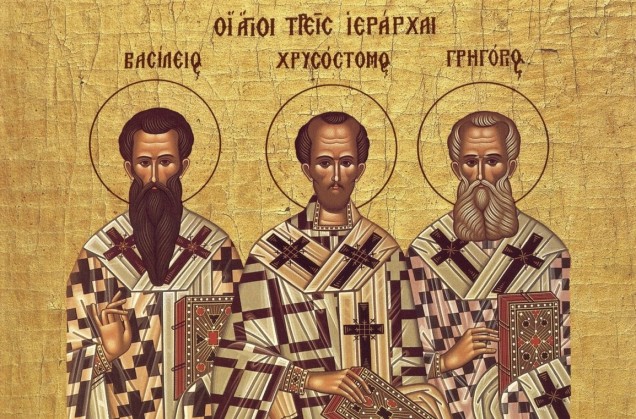
Cappadocians 1

[Many, upon reading this piece, have noted that there is no formal definition of “racism” or even “race” included. This is by design, though I see that it could be confusing. Defining “racism” as such is admittedly difficult and would alone constitute matter for an essay much longer than even what appears here; and even if that were accomplished, there would still remain much disagreement. Therefore, the approach of these outlines is to target and identify specific claims that most would acknowledge as “racist,” regardless of how fuzzy the edges of the set of ideas in question may be. For example, this outline deals only with claims of superiority or inferiority between races (as per Martin Luther King, Jr.’s, “myth of inferior peoples”). If one’s specific brand of racist ideology does not include nor imply a claim of superiority or inferiority, then clearly this post does not capture that specific ideology. (Though arguments of implication may often be successfully employed to demonstrate that superiority/inferiority is in fact being claimed, though not directly. For some historical definitions of “racism,” see HERE.)

Further, the concept “race” itself is not defined, but for much the same reasons. The argument of this particular outline proceeds on the assumption that if one believes and confesses superiority or inferiority among races also is assuming that there is such a thing as “race”; this does not logically imply that there is in fact such a thing as “race” (though I think the concept is legitimate and useful if handled correctly as a social construction and as colloquially employed). The reader will see below that, working with the understanding of one who claims superiority/inferiority, race would minimally (not maximally!) include common progeneration. So, rather than defining the term, given abundant disagreement, I assume only what would be minimally included by one who would employ the term to claim superiority/inferiority. (For a helpful discussion of “race,” see HERE.)

And last, the reader should note that there is no specific race or ethnicity targeted in what follows; any claim by anyone that any race can be superior or inferior to any other falls within the scope of criticism below.]

Continue reading

ESS, Slavery, and the Metaphysic of Oppression

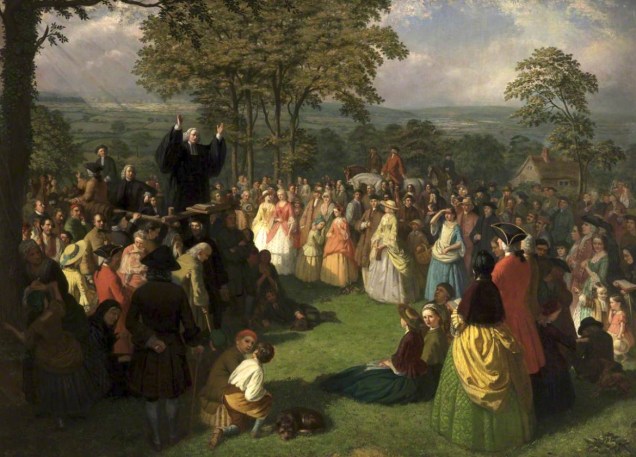
George WHitfield

George Whitfield believed that “Africans” were human but subordinate creatures and as such could rightfully be enslaved. He saw this as an act of beneficence on behalf of the white Christian slave holder. In like manner, Robert Lewis Dabney, while discussing “natural equality” states the following:

[…]if the low grade of intelligence, virtue and civilization of the African in America, disqualified him for being his own guardian, and if his own true welfare (taking the “general run” of cases) and that of the community, would be plainly marred by this freedom; then the law decided correctly, that the African here has no natural right to his self-control, as to his own labour and locomotion. Hence, his natural liberty is only that which remains after that privilege is retrenched.[1]

While hideous, the metaphysic of such a position was simple: those unequal in nature, being, dignity, and attributes are also unequal in relations, including authority and submission, right to command and duty to obey. “Equality” only extends to the individuals as a requirement for equal duty before God—one to care for his subordinate and the other to obey his superior. Equity was simply the Golden Rule practiced according to one’s natural lot.

Continue reading