The Christian and Critical Race Theory, Part 3: A Bridge: Dr. Derrick Bell

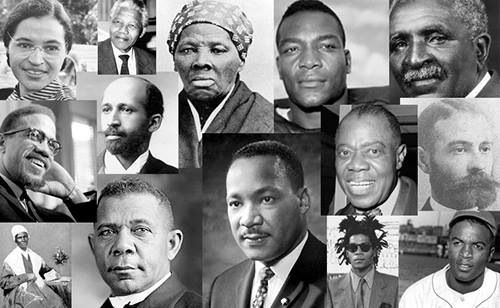
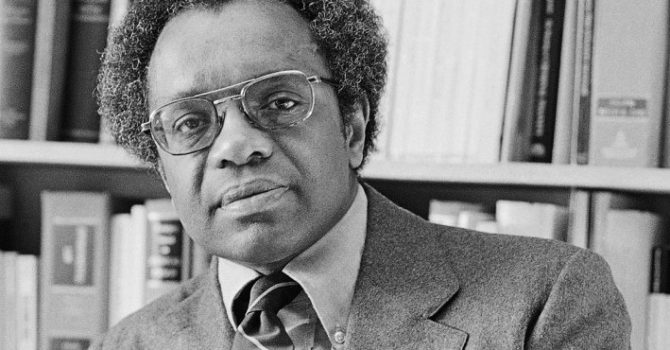
Dr.DerrickBell-670x350

The third post in my series, The Christian and Critical Race Theory, is now up on The Front Porch!

… Bell’s work signaled a return to the more ‘radical’ elements of W.E.B. Du Bois, Oliver C. Cox, Stokely Carmichael, and even Dr. King, with a renewed emphasis on race-consciousness, power dynamics, economic explanations, and substantive equality over symbolic equality …

Please take a look and let me know what you think.

Part 1: “The Christian and Critical Race Theory, Part 1: A Survey of the ‘Traditional Civil Rights Discourse’

Part 2: “The Christian and Critical Race Theory, Part 2: The Segregationist Discourse and Civil Rights Retrenchment

Part 3: “The Christian and Critical Race Theory, Part 3: A Bridge: Dr. Derrick Bell”

Part 4: “The Christian and Critical Race Theory, Part 4: Alan Freeman and the Contribution of CLS

Part 5: “The Christian and Critical Race Theory, Part 5: A Misalignment of Frames: Integrationism

Part 6: “The Christian and Critical Race Theory, Part 6: A Misalignment of Frames: The ‘New Right’

Part 7: “The Christian and Critical Race Theory, Part 7: A Race Intervention Into Critical Legal Studies

Part 8: “The Christian and Critical Race Theory, Part 8: the Harvard Story and the Birth of ‘Critical Race Theory’

Interlude: “The Christian and CRT, an Interlude: The Most Segregated Hour and Liberal Integrationism

And if you want to go back to Critical Theory more broadly, please start here: “Christianity and Critical Theory, Part 1: Marx and Frankfurt

Follow @AlsoACarpenter

The Christian and Critical Race Theory, Part 2: The Segregationist Discourse and Civil Rights Retrenchment

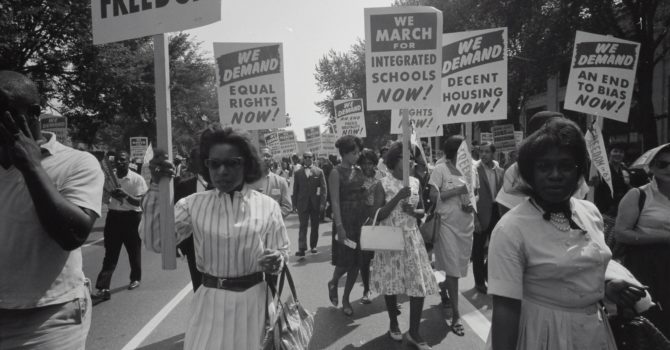
CRT Porch Article 2 Image

The second post in my Critical Race Theory series now up, over on The Front Porch!

Please take a look and let me know what you think.

Part 1: “The Christian and Critical Race Theory, Part 1: A Survey of the ‘Traditional Civil Rights Discourse’

Part 2: “The Christian and Critical Race Theory, Part 2: The Segregationist Discourse and Civil Rights Retrenchment

Part 3: “The Christian and Critical Race Theory, Part 3: A Bridge: Dr. Derrick Bell”

Part 4: “The Christian and Critical Race Theory, Part 4: Alan Freeman and the Contribution of CLS

Part 5: “The Christian and Critical Race Theory, Part 5: A Misalignment of Frames: Integrationism

Part 6: “The Christian and Critical Race Theory, Part 6: A Misalignment of Frames: The ‘New Right’

Part 7: “The Christian and Critical Race Theory, Part 7: A Race Intervention Into Critical Legal Studies

Part 8: “The Christian and Critical Race Theory, Part 8: the Harvard Story and the Birth of ‘Critical Race Theory’

Interlude: “The Christian and CRT, an Interlude: The Most Segregated Hour and Liberal Integrationism

And if you want to go back to Critical Theory more broadly, please start here: “Christianity and Critical Theory, Part 1: Marx and Frankfurt

The Christian and Critical Race Theory, Part 1: A Survey of the “Traditional Civil Rights Discourse”

CRT Porch Article 1 Image

Though I’ve covered Critical Theory generally, I’ve begun a new series on Critical RACE Theory proper, over on The Front Porch! I’m attempting to approach the subject in a more historical manner that I hope will facilitate greater understanding of the subject.

As a layman, I find that learning a subject through its actual historical milieu helps me not only remember the right words, phrases, and concepts, but, more importantly, helps me understand them. And it is understanding which seems most lacking in evangelicalism when it comes to Critical Race Theory (CRT). As such, I hope over the next few posts, in the most conversational manner possible, to not only provide the nuts and bolts of this broad ideology as presented by its chief advocates, but to also, as it were, tell the story of CRT, before moving into any critical assessment.

So grateful they were kind enough to publish it! Please take a look and let me know your thoughts!

Part 1: “The Christian and Critical Race Theory, Part 1: A Survey of the ‘Traditional Civil Rights Discourse’

Part 2: “The Christian and Critical Race Theory, Part 2: The Segregationist Discourse and Civil Rights Retrenchment

Part 3: “The Christian and Critical Race Theory, Part 3: A Bridge: Dr. Derrick Bell”

Part 4: “The Christian and Critical Race Theory, Part 4: Alan Freeman and the Contribution of CLS

Part 5: “The Christian and Critical Race Theory, Part 5: A Misalignment of Frames: Integrationism

Part 6: “The Christian and Critical Race Theory, Part 6: A Misalignment of Frames: The ‘New Right’

Part 7: “The Christian and Critical Race Theory, Part 7: A Race Intervention Into Critical Legal Studies

Part 8: “The Christian and Critical Race Theory, Part 8: the Harvard Story and the Birth of ‘Critical Race Theory’

Interlude: “The Christian and CRT, an Interlude: The Most Segregated Hour and Liberal Integrationism

More to come!

Standpoint Theory is not Anti-Christian

Perspectives

Thou shalt love thy neighbor as thyself (Lev. 19.18). That is the second commandment, like unto the first (Matt. 22.39), and therein the whole law is fulfilled. This love proves to be such a mercy to the weak and oppressed, to the poor, the strangers, the widows, the orphans, to men-servants and maid-servants, to the deaf, the blind, the aged, and the like, as no other law of antiquity knows. It has been rightly said that Israel’s moral code was written from the viewpoint of the oppressed. Israel never forgot that it had been a stranger and a servant in Egypt. (Herman Bavinck, Our Reasonable Faith, pp.69-70)

What Standpoint Theory/Epistemology Is and Is Not

Contrary to much current demagoguery, Standpoint Theory (or, similar, “Standpoint Epistemology”) is in fact rooted in empiricist, evidentialist, epistemology. The epistemic relevance of Standpoint Theory has to do with evidence and justification, not the nature of truth, its objective character, nor its public accessibility. Rather,

The claim is that members of marginalized groups are more likely to have had experiences that are particularly epistemically salient for identifying and evaluating assumptions that have been systematically obscured or made less visible as the result of power dynamics. (Kristen Intemann, p. 791)

Or, in Ozlem Sensoy and Robin DiAngelo’s words,

Minoritized groups often have the widest view of society, in that they must understand both their own and the dominant group’s perspective—develop a double-consciousness—to succeed.” (Is Everyone Really Equal?, p. 70)

Continue reading

A Case of Racial Exclusion? : The “Concerned Members of FBCN” and Pastor Marcus Hayes

Marcus Hayes 2

Nearly one week ago, the pastoral staff of First Baptist Church Naples released a statement announcing that pastor Marcus Hayes had failed to reach the threshold of 85% in the congregation’s vote for senior pastor, retaining only 81% of the total vote. On its own, this is not entirely remarkable as many churches have an even higher vote threshold required for installation. But what set the internet ablaze was the staff’s statement that, “through social media, texting, phone calls, and emails, racial prejudice was introduced into our voting process.” The usual suspects aligned on each side of the ensuing debate, some seeking immediate disciplinary action, some seeking more information, and others assuming it was a lie, given that over 360 members—those who voted “no” and/or actively campaigned against him—would have to have been white supremacists; a near impossibility, in their minds, in modern America.

Within a couple days, emails began to be released which, to many, painted a very different picture. None of the emails produced mentioned anything about Hayes’ race nor included any specific racialized language. Reformation Charlotte, the blog which has been publishing the emails, summarized the nature of the “group of concerned FBCN members’” critical campaign against Hayes:

Continue reading

Appealing to Dr. King to Oppose Antiracism is Ignorant, at Best

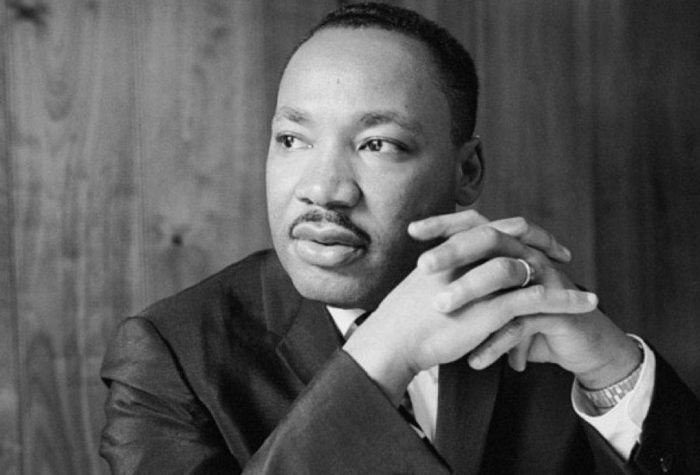
MLK Pic

Many who claim to “oppose racism in all its forms,” yet condemn the work of antiracists in modern America, truly believe they are simply hearkening back to a purer, more Christian anti-racism of Dr. Martin Luther King, Jr.

For example, in an article decrying the “identity politics” of modern antiracism, we read:

The Civil Rights Movement, second-wave liberal feminism, and Gay Pride functioned explicitly on these values of universal human rights and did so to forward the worth of the individual regardless of status of race, gender, sex, sexuality, or other markers of identity. They proceeded by appealing directly to universal human rights applying universally. They demanded that people of color, women, and sexual minorities no longer be discriminated against and treated as second class citizens. They insisted that within a liberal society that makes good on its promises to its citizens, everyone should be given the full range of rights, freedoms, and opportunities.

Martin Luther King, Jr., articulated this ethos of individuality and shared humanity explicitly when he said, “I have a dream that my four children will one day live in a nation where they will not be judged by the color of their skin, but by the content of their character.” (James Lindsay, “Identity Politics Does Not Continue the Work of the Civil Rights Movement”)

Continue reading