The Gospel, the Social Gospel, and Gospel-Only-ism, Part 2: “Gospel to the Poor”

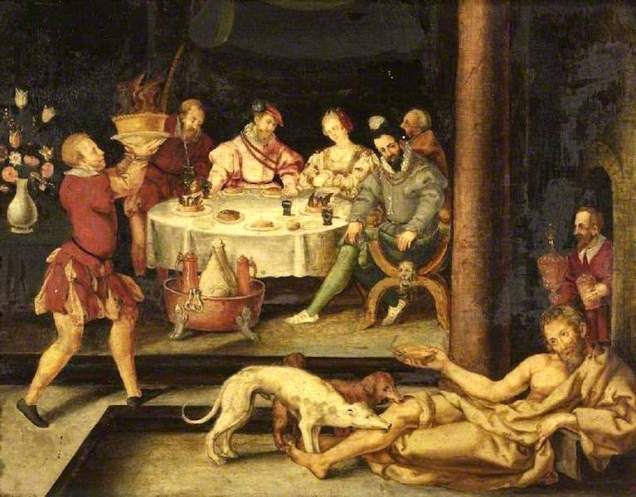
(c) The Fitzwilliam Museum; Supplied by The Public Catalogue Foundation

As discussed in PART 1, the “gospel,” according to the Scripture, appears to be a much fuller concept than the mere facts of Christ’s death for sin and resurrection, though these are certainly of “first importance” (1 Cor. 15:3). Beginning with the New Testament epistles, we saw that the gospel also includes the certainty of impartial judgement on the Last Day, contradicts a host of both personal and social sins, dictates who we ought to eat with, and is actually something to be “obeyed.” Going back to the beginning, it became clear that the protoevangelium of Genesis 3:15 promised a restoration of all that was lost in the fall; that is, it promised resurrection of both body and soul, return to original righteousness, renewal of mankind’s natural habitation, and the restoration of society with both God and man (and in each case, much more than the original). The Apostle Paul calls this message of the Seed the “gospel” (preached to Abraham), and the author of Hebrews calls the promise of entrance into God’s seventh day rest the “gospel” as well (preached to the Israelites in the Wilderness), both drawing on Garden evangel themes.

Continue reading

“Whiteness” as Pejorative

White

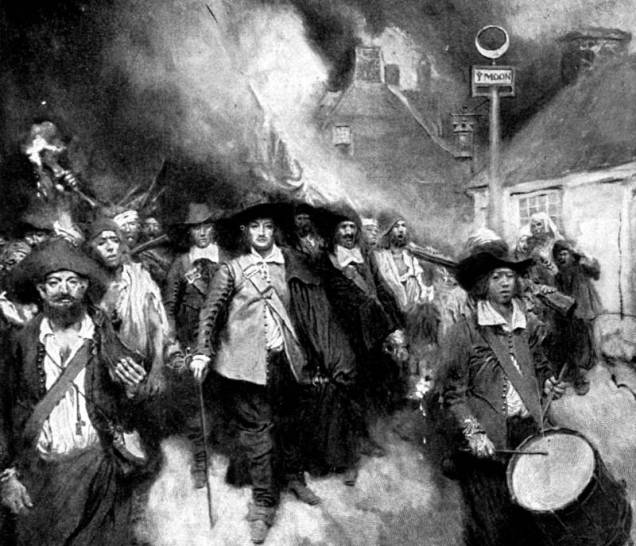
Just as “Blackness” was cobbled together out of various nations, tribes, tongues, and shades of brown—beginning around the time Gomes De Zurara’s bogus descriptions of African peoples as a beastly lot, in order to justify Prince Henry’s enslaving prowess—so “Whiteness” was cobbled together out of various nations, tribes, tongues, and lighter shades of brown to form the “White Race.” There simply was no such thing as “White People,” the “White Race,” or “Whiteness” as a concept defining distinct people-groups until, really, the turn of the 18th century.

Prior to the development of colonial governments in the Americas, people-groups were largely identified by nationality; there were Irishmen, Englishmen, Germans, Italians, Slavs, Senegalese, Ghanaians, Malians, etc. At the beginning of the 17th century, these men and women worked side by side in the construction of the New World, primarily as indentured servants subject to the term of 6 years under British common law.

Continue reading

Addendum: I Believe Systemic Racism Exists Because of Biblical Anthropology, Hamartiology, and Soteriology

biblical anthropology

[T]here is nothing wrong with Black people as a group, or with any other racial group. That is what it truly means to think as an antiracist: to think there is nothing wrong with Black people, to think that racial groups are equal. There are lazy and unwise and harmful individuals of African ancestry. There are lazy and unwise and harmful individuals of European ancestry. There are industrious and wise and harmless individuals of European ancestry. There are industrious and wise and harmless individuals of African ancestry. But no racial group has ever had a monopoly on any type of human trait or gene—not now, not ever. Under our different-looking hair and skin, doctors cannot tell the difference between our bodies, our brains, or the blood that runs in our veins. […] Black Americans’ history of oppression has made Black opportunities—not Black people—inferior. (Stamped From the Beginning, p. 11)

Introduction

As I’ve stated before, the existence of SYSTEMIC OR INSTITUTIONALIZED RACISM, i.e., “polices, practices, and procedures of institutions that have a disproportionately negative effect on racial minorities’ access to and quality of goods, services, and opportunities” (Vernellia R. Randal), is a simple deduction from three premises:

  1. Well documented and vast social and economic disparities between black and white Americans, including de facto neighborhood, school, and church segregation.
  2. All racial groups are equal; in Ibram X Kendi’s words, “no racial group has ever had a monopoly on any type of human trait or gene—not now, not ever.”
  3. The majority of Americans are not overt racists, members of a neo-Nazi party, or intentionally discriminating against black Americans due to conscious prejudice and hatred.

Continue reading

Anthony Bradley & “Cosmic Redemption” : Herman Bavinck & Imago Dei

Cosmic Redemption

Reading Dr. Anthony Bradley’s recent article, “The Great Commission Christianity Keeps Blacks Away From Evangelicalism,” I was reminded of the section of Herman Bavinck’s Reformed Dogmatics entitled, “The Whole Person as the Image of God.” Bavinck is careful throughout to capture all that it means to be created in the image and likeness of God (Gen. 1:26-28), in order to properly know who man is, what redemption must include to fully restore him, and to rightly know the “Last Adam,” our Lord Jesus Christ, who is to accomplish this redemption.

In this post, however, I hope to narrowly focus on the correlation between redemption and the image of God in man, as I think this aspect of Bavinck’s study nicely reinforces Dr. Bradley’s emphasis on “Cosmic Redemption.”

Continue reading

Segregationists, Assimilationists, and Antiracists

Stamped 2

I was asked recently by a friend if it was correct to say that every American—whether white, Latinx, black, etc.—is a participant in systemic racism, and therefore racist. Given that social structures and institutions have been historically formed in America to benefit white people at the expense of others, then isn’t everyone who participates in such systems also participating in white supremacy? I think this is a very important question. As the wider culture finds itself engaged in deciding who is racist, who isn’t, and why I am not and you are, the binary assumed, viz., “racist” or “not racist,” not only de-emphasizes the distinction between racism as individual and systemic, but also bifurcates what is obviously a much more complicated spectrum. It is easy to say that a Neo-Nazi is a racist, but what about an African American who ascribes the vast current social and economic disparities to black laziness or immorality? Or ascribes segregated churches to blacks’ disinterest in sound theology? And what about white and black Americans who simply give little thought to the disparity or segregation at all, but continue to travel the same worn paths?

Here is where Ibram X. Kendi’s categories “segregationist,” “assimilationist,” and “antiracist” can be so helpful.

Continue reading

Did MacArthur Lie? I Don’t Know, But…

john-macarthur

[For context, see “A Civil Rights Leader Is Accusing John MacArthur of ‘Lying’ About Where He Was When MLK Died.”]

As many discuss the accuracy of Pastor John MacArthur’s oft told experience with John Perkins and Charles Evers the night Dr. King was murdered, I’d suggest we need to keep in focus the hypocrisy involved in the very telling of these stories. MacArthur often offers such tales to bolster his Civil Rights bona fides before going on to criticize the so-called “social justice” movement in the Church. He prefaced his very first post in a series attacking modern Racial Reconciliation (RR) advocates with the same. Immediately after claiming, “[w]e were also shown the place where James Earl Ray stood on a toilet to fire the fatal shot,” he declares the following with bolstered accreditation:

Continue reading

What Is & Isn’t Being Said: 9. Narrow Spirituality, the Black Church, and Systemic Racism

nsoc 2

This is a continuation of our last post, “What Is & Isn’t Being Said: 8. Systemic Racism & the Narrow Spirituality of the Church.”

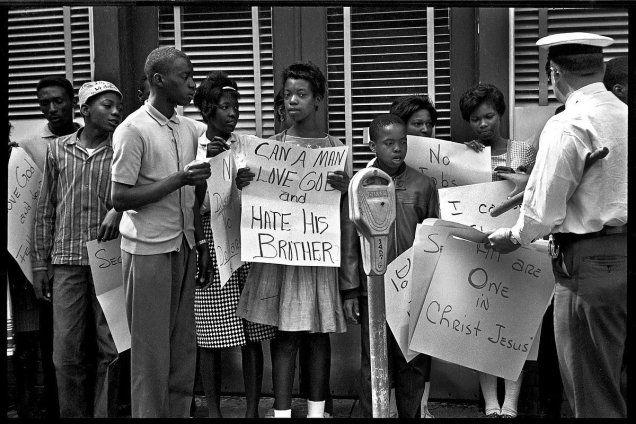
Meanwhile, a very different understanding of the mission and role of the Church had grown up in the United States. From the time African Americans began forming their own churches and denominations in the 18th century—due to abuse, violence, persecution, and egregious violations of the Communion of the Saints—they consistently rejected this narrow spirituality view, and for what should be very obvious reasons. The hypocrisy of the American Church was never lost on African Americans, whether slave or free, nor the spuriousness of their truncated “gospel.”

Continue reading

Correcting (my own) Normativity of Whiteness, Conclusion: From “Racial Biology” to “White Supremacy”

Mankind1ma6

[For needed context, please see the previous posts, “Correcting (my own) Normativity of Whiteness: 1. From the Arrival of the First African Slaves to ‘Partus Sequitur Ventrem’” and “Correcting (my own) Normativity of Whiteness: 2. From Bacon’s Rebellion to ‘White Men’ and ‘White Women’.”]

Thus far, we have witnessed the movement from a disparate group of indentured servants—originating from various European and African nations, working side by side in the English Colonies—into a bifurcation of (1) “white men” and “white women” and (2) “Negroes, Mulattos, and Indians.” Through the developing legal code, we have also seen the class “white” receive legal protections and privileges while the class “Negro and Mulatto” alone became subjects of life-long chattel slavery—they and their children.

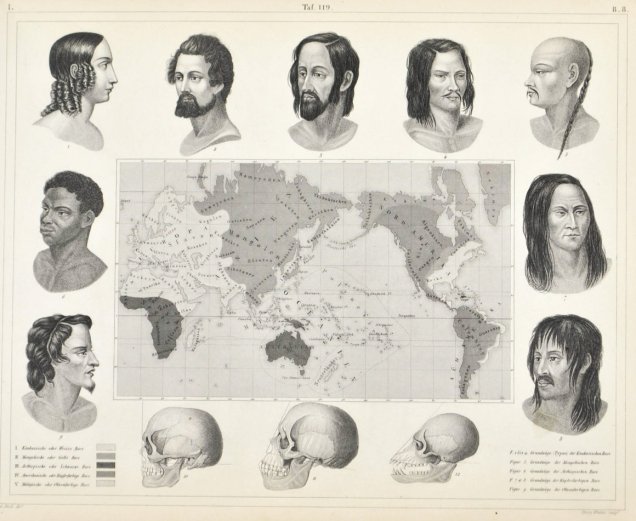
As stated at the end of the last post, the only element lacking in the construction of the “white race” by 1723 was the concept of “race” itself. We will now briefly turn to this, though with an eye to our purposes rather than the details of the “science” itself, its definitions, etc. We will then move on to the post-Revolutionary era and conclude with some application.

Continue reading

Correcting (my own) Normativity of Whiteness: 2. From Bacon’s Rebellion to “White Men” and “White Women”

bacons-rebellion

[Please see the previous post, “Correcting (my own) Normativity of Whiteness: 1. From the Arrival of the First African Slaves to ‘Partus Sequitur Ventrem’,” for needed context.]

In what follows, we continue to consider the construction of the “white race” and “whiteness” as developed in Colonial American history. As noted before, there simply was no such thing as “white people” prior to the 17th century. We have already witnessed how, through legal changes, a disparate group of indentured servants from various European and African nations, working side by side at the beginning of the 17th century, were transformed into roughly two groups, (1) “Christians” and those from “Christian nations,” receiving legal protections, and (2) those imported from non-“Christian” nations, comprising (with few exceptions) those of African descent alone—and their children. The latter increasingly became subjects of life-long servitude, while the former were granted more and more legal protections and comparative privileges. But as we have also seen, once conversion to Christianity was legally clarified to not require manumission, new lines of demarcation and categorization were needed to maintain the social control system necessary for a slave-based economy, wherein a few wealthy land-holders employed with scraps and chains an overwhelmingly large labor class.

And possibly more than any other event, Bacon’s Rebellion made clear to Virginia’s leadership the necessity of new lines of demarcation among these laboring people groups. To this we will now turn.

Continue reading

Then & Now: The Conservative Presbyterian Race Debate in 1964

Oliver collage 4

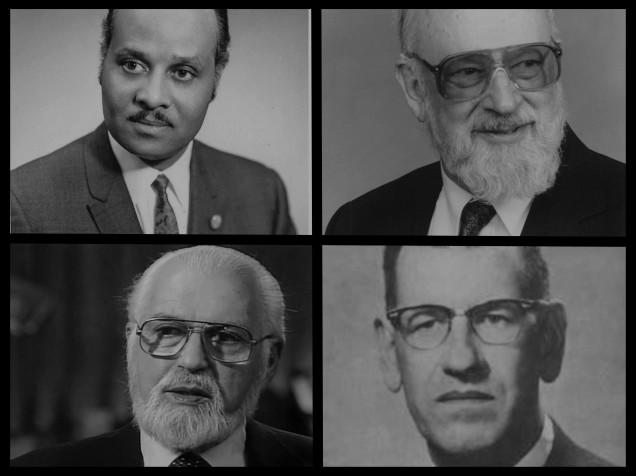
In this article, I hope to give some idea of the state of the race debate among conservative Presbyterians, especially those associated with the Orthodox Presbyterian Church (OPC) and those who would later form the Presbyterian Church of America (PCA), just following the passage of the Civil Rights Act in 1964. This will be done through the lens of The Presbyterian Guardian and will feature a discussion of C. Herbert Oliver’s articles condemning segregation, Morton H. Smith’s article defending segregation, and letters to the editor written by R. J. Rushdoony, E. J. Young, and other Reformed and Presbyterian believers of the day. My hope is that as we reflect on these articles and the state of the debate in 1964, we will see that while much has changed, much of the opposition has remained the same.

Continue reading