Complementarity Without Subordination

o-ADAM-AND-EVE-facebook
Adam and Eve Gustav Klimt (Austrian, 1862–1918) 1917-1918 Oil on canvas *Belvedere, Vienna * © Belvedere, Vienna *Courtesy Museum of Fine Arts, Boston

Some Background and Statement of the Question

In my previous post, “ESS, Slavery, and the Metaphysic of Oppression,” I first rejected the simple metaphysic of “unequal in nature, therefore unequal in authority” as Biblically inapplicable to human relations.  I next noted that with the failure of the simple metaphysic, defenders of slavery within the Church turned to a metaphysic of “equal in nature, yet subordinate in subsistence”, or a metaphysic of the inequality of equals.  I next noted that Complementarians in modern evangelicalism have also turned to the metaphysic of “equal in nature, yet subordinate in subsistence” to rescue male headship from the feminist onslaught, but with a much more robust footing supplied by the supposed Eternal Subordination of the Son (ESS) teaching.  I rejected this position as well as a metaphysic of oppression, grounded as it is in Trinitarian error and the subordination of persons as to their very subsistence.

Of course the questions/push back from evangelicals has been to question how one could still believe in male headship in the home, as I do, yet reject both of the above metaphysical principles.  It is a good question and warrants more than a brief answer. If the metaphysic grounded in the ESS view of the Trinity is a metaphysic of oppression, then one must believe in the inequality of nature to maintain male headship, right?  And if one rejects both, then aren’t we left with egalitarianism as the only remaining option? I, of course, have no newfangled answer, nor my own special way of treating the subject; it has been treated better and more extensively by others.  Rather, I believe that the very asking of this question just shows how much subordinationist thought has infiltrated evangelicalism, so I hope only to point the reader in a different direction and perspective to continue studying the issue.

Continue reading

ESS, Slavery, and the Metaphysic of Oppression

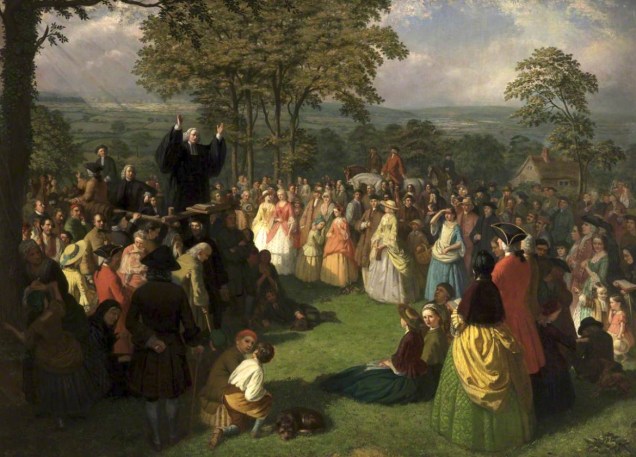
George WHitfield

George Whitfield believed that “Africans” were human but subordinate creatures and as such could rightfully be enslaved. He saw this as an act of beneficence on behalf of the white Christian slave holder. In like manner, Robert Lewis Dabney, while discussing “natural equality” states the following:

[…]if the low grade of intelligence, virtue and civilization of the African in America, disqualified him for being his own guardian, and if his own true welfare (taking the “general run” of cases) and that of the community, would be plainly marred by this freedom; then the law decided correctly, that the African here has no natural right to his self-control, as to his own labour and locomotion. Hence, his natural liberty is only that which remains after that privilege is retrenched.[1]

While hideous, the metaphysic of such a position was simple: those unequal in nature, being, dignity, and attributes are also unequal in relations, including authority and submission, right to command and duty to obey. “Equality” only extends to the individuals as a requirement for equal duty before God—one to care for his subordinate and the other to obey his superior. Equity was simply the Golden Rule practiced according to one’s natural lot.

Continue reading

“Economic” Subordination of the Son? Part 1: Theologia and Oikonomia

cropped-img_bg_huge

[M]en have erred through a want of careful examination or consideration of the whole tenor of the Scriptures, and have endeavored to transfer those things which are said of Jesus Christ according to the flesh, to that substance of His which was eternal before the incarnation, and is eternal. (Augustine, On the Trinity, Bk. 1, Ch. 7.14)

In my earlier post, “Subordination of the Son, Ligonier, and the ‘Economic’ Trinity”, I noted how the revised Ligonier Statement on Christology included the phrase, “We deny the eternal subordination of the Son to the Father in the ontological Trinity,” apparently in response to the previous Summer’s Eternal Subordination of the Son (ESS) debate.  I noted that I was momentarily encouraged by this, but was then immediately struck by the fact that everyone on every side of the debate agrees with this statement as well!  Even the most visible proponent of ESS, Wayne Grudem, argues,

This truth about the Trinity has sometimes been summarized in the phrase “ontological equality but economic subordination,” where the word ontological means “being.” If we do not have ontological equality, not all the persons are fully God. But if we do not have economic subordination, then there is no inherent difference in the way the three persons relate to one another, and consequently we do not have the three distinct persons existing as Father, Son, and Holy Spirit for all eternity. For example, if the Son is not eternally subordinate to the Father in role, then the Father is not eternally “Father” and the Son is not eternally “Son.” This would mean that the Trinity has not eternally existed.

This is why the idea of eternal equality in being but subordination in role has been essential to the church’s doctrine of the Trinity since it was first affirmed in the Nicene Creed, which said that the Son was “begotten of the Father before all ages” and that the Holy Spirit “proceeds from the Father and the Son.” (Systematic Theology)

(Earlier in the text, Grudem defines the economic Trinity: “The ‘economy of the Trinity’ means the different ways the three persons act as they relate to the world and […] to each other for all eternity.”)

While there is so much wrong with these statements, what I would like to note here is: (1) Grudem, while fully endorsing the Eternal Subordination of the Son, would also fully agree with the words of the Ligionier statement; (2) Grudem believes that subordination properly resides within the eternal Trinity as economically conceived; and (3), he believes that this is the position of the Nicene Fathers, that there is subordination in the “economic” Trinity but equality in the “ontological” Trinity.

Continue reading

Subordination of the Son, Ligonier, and the “Economic” Trinity

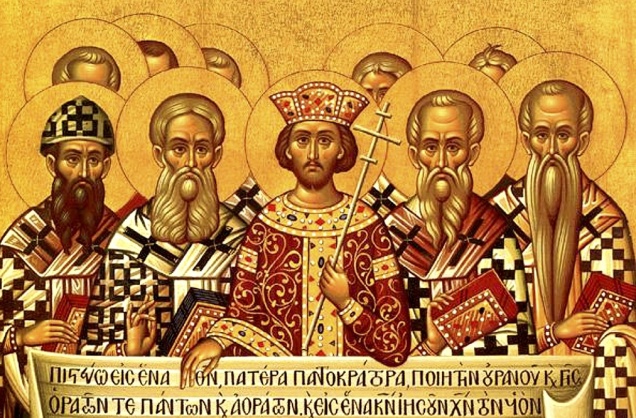
Nicaea_icon

To those for whom ESS (Eternal Subordination of the Son) or EFS (Eternal Functional Subordination) or ERAS (Eternal Relation of Authority and Submission) or (is that all of them?) does not ring a bell, the following may not be all that interesting. Though debated off and on for at least the last 20 years or so, the popular claim that the Son of God is equal to the Father yet subject to His authority in all eternity, has over the Summer of 2016 come under intense scrutiny; and rightly so. Confessionally Reformed Christians and scholars from many quarters have demonstrated this teaching to plainly run afoul of Nicene Orthodoxy, with the potential to shipwreck some of the very pillars of orthodox Trinitarian doctrine.

So I was (momentarily) delighted when Ligionier Ministries updated their Statement on Christology to include an addition to “Affirmations and Denials” Article 2 (in bold below):

We affirm that in the unity of the Godhead the eternally begotten Son is consubstantial (homoousios), coequal, and coeternal with the Father and the Holy Spirit.

We deny that the Son is merely like God (homoiousios) or that He was simply adopted by the Father as His Son. We deny the eternal subordination of the Son to the Father in the ontological Trinity.

My delight quickly evaporated, however, when my very next thought was, “So does Wayne Grudem!”, the popularizer-in-chief of ESS/EFS/ERAS. He and most all proponents of the teaching also deny that the subordination or submission to authority is according to the Trinity as ontologically conceived. They point out consistently that such a position would constitute classic, literal, Arianism—to which we must agree.

Continue reading