What Is & Isn’t Being Said: 3. “White Privilege”

White Privilege

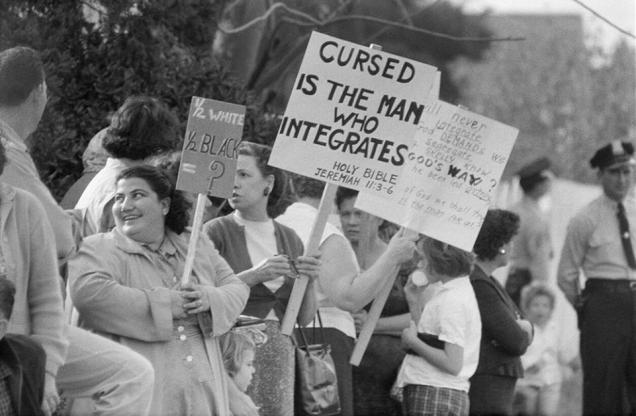
As there has been much discussion over the topic of Racial Reconciliation in recent months, I thought I might do my best to clarify what is and isn’t being said by RR advocates such as myself. Of course, I cannot speak on behalf of everyone pressing the case, but I hope to at least clarify some of the terms, phrases, and assumptions being debated. This might constitute a lengthy series, but if it proves to be beneficial to any interested in this discussion, I will indeed continueTopics will include “race,” “white privilege,” “color-blind,” “institutional racism,” and more. Feedback is welcome. 

[Please see the previous post, “What Is & Isn’t Being Said: 2. ‘Race’ and the Racialized Society,” for the necessary historical context.]

Privilege?

“Privilege” can be generally defined as,

A special right, advantage, or immunity granted or available only to a particular person or group.

Continue reading

What Is & Isn’t Being Said: 2. “Race” and the Racialized Society

Race

[I have since added some needed clarification to this post, beginning with “Correcting (my own) Normativity of Whiteness: 1. From the Arrival of the First African Slaves to ‘Partus Sequitur Ventrem’.”]

As we concluded the last post,

[T]here is nothing particularly pernicious about the social construction of race as such, any more than there is in the construction of genos, ethnos, or phulé [in the New Testament]. The insidiousness of the concept comes when a society, consciously or unconsciously, constructs racial distinctions for the very purpose of division, systematic subjugation, and a permanent caste system. And this brings us to our next post, “What Is & Isn’t Being Said: 2. ‘Race’ and the Racialized Society”.

We will now discuss “race” in the racialized society as we find it today, particularly in the United States. I ask only that you forgive the relative length of this piece; it will prove fruitful context for the topics that will follow. Also, I would like to make explicit that this discussion is in no wise intended to ignore the plight of other minority people groups in American society. Much of what is said here can apply to the experience of other race and ethnic groups as well, though there is a very definite distinction of degrees, length of history, and legal specificity within racialized institutions. As Condoleezza Rice once said, “I do think that America was born with a birth defect; it was slavery.”

Continue reading

What Is & Isn’t Being Said: 1. “Race” and the Bible

cropped-img_bg_huge

As there has been much discussion over the topic of Racial Reconciliation in recent months, I thought I might do my best to clarify what is and isn’t being said by RR advocates such as myself. Of course, I cannot speak on behalf of everyone pressing the case, but I hope to at least clarify some of the terms, phrases, and assumptions being debated. This might constitute a lengthy series, but if it proves to be beneficial to any interested in this discussion, I will indeed continue—hopefully at least two topics per weekTopics will include “race,” “white privilege,” “color-blind,” “institutional racism,” and more. Feedback is welcome. 

1. “Race” and the Bible

Many argue that the concept of race is unbiblical and is nowhere to be found in the Scripture. While I understand the intent of this claim, specifically to reject any basis for “scientific racism,” I think there is a complex of concepts in the Scripture which nevertheless capture what well-meaning English speakers mean by “race.” We find throughout the Scripture similar concepts of “kind,” “kindred,” “tribe,” “nation,” etc., attributed to men, and not just as Old Testament categories, as is commonly thought.

Continue reading

Why Racism is Material Heresy : Responding to Questions/Objections to Outline 1

Questions

I have been surprised by the amount of negative reactions and wagon circling defensiveness I have received in response to the previous post, “Why Racism is Material Heresy and Ought to be Formal Heresy : Outline 1.” The scope of the piece was quite narrow, targeting only the claim that races as such can differ by superiority or inferiority, even pointing out that if this specific claim does not apply to a given ideology, then it does not fall under this particular critique (though it my the next). Nevertheless, I have been called a Marxist, a Social Justice Warrior, “woker than thou,” and the like. I’ve read Das Kapital and I promise I am no Marxist; I guess I do have concern for social justice (I reject Two Kingdom theology after all); and I promise I’d never even heard the word “woke” until recently.

Many also just don’t seem to like the claim that racism could be considered heresy, either because the word should be reserved for “more important” errors, or because they still do not see it as de fide error. But what else could it be? It is an ideology, a matter of belief and confession. It is not primarily an action. Any other errant ideology, belief, or confession that corrupts essential doctrines is subject to the charge of heresy, why not the belief and confession that some race can be superior to another?

Continue reading

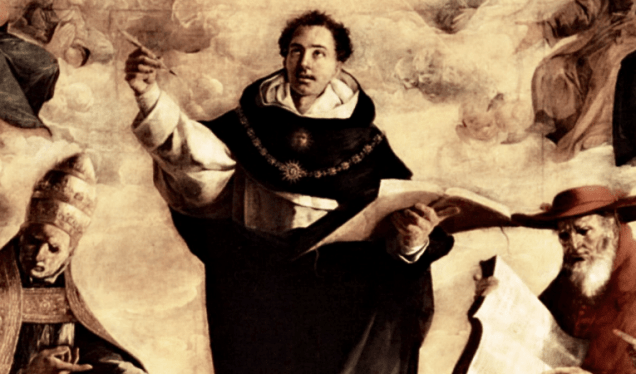
Thomas Aquinas on the Obedience of the Son (re: “The Obedience of the Eternal Son,” Part 3)

Apotheosis-of-St.-Thomas-Aquinas

Introduction

After questioning the motivation for the essay “The Obedience of the Eternal Son” in my first post, and then justifying my representation of the essay in the second, we are now in a position to enter into the substance of the discussion. But rather than continue with polemics, I have decided to take a piece of advice from Dr. Michael Allen and engage more constructively. (Plus, very few of my readers are even familiar with the essay under consideration as it is not easily linkable.) I do intend to continue questioning the thesis of the so-called “obedience of the eternal Son,” but rather by presenting what I believe to be an accurate representation of the Biblical data, and then comparing several alternate claims, concluding with an assessment of Drs. Swain and Allen’s parrying of the objections of Thomas Joseph White to their thesis.

As the work of Thomas Aquinas is the primary resource for Swain and Allen’s coordination of “the obedience of the eternal Son” with “traditional trinitarian metaphysics in the classical Catholic and Reformed tradition,” I will accordingly present what I perceive to be the Catholic and Reformed tradition as found in Aquinas’s Summa Theologiae.

Continue reading

Some Questions re: “The Obedience of the Eternal Son”: Part 2, Clarifications and Justifications

Chalcedon

What Should Be Clear

Though I did intend in the first post of this series to disagree with Swain and Allen’s essay, “The Obedience of the Eternal Son,” I certainly did not want to misrepresent it. I think I have stated clearly that neither Scott Swain nor Michael Allen held to the Eternal Functional Subordination of the Son (EFS), nor was their essay intended to support it. It would make no sense in the context of their piece to argue that they did. The point of their essay was to show a path such that one could affirm the obedience of the eternal Son of God without succumbing to such ahistorical revisions of Trinitarian doctrine and metaphysics as found in EFS. They refer specifically the specter of identifying “obedience as the Son’s distinguishing personal property (usually identified as the Son’s ‘role’ in the Trinity),” pointing to Grudem and Ware in the footnote (p. 74).  Further, an eternal “functional” obedience would fare no better on these terms since the constant assumption throughout the piece is that one cannot divide the Being and acts of the Son of God.

Continue reading

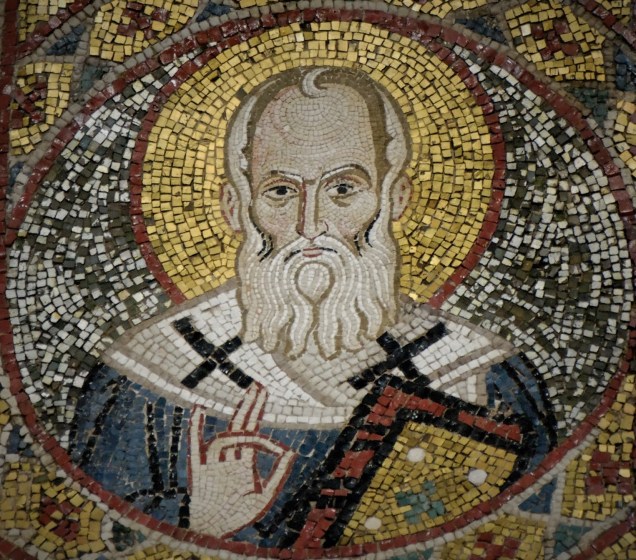
A Christmas Reading From Gregory of Nazianzus (329-390)

Gregory

[The following selctions are from Gregory of Nazianzus’ Oration 29 and Oration 38, the latter delivered on Christmas Day 380 AD.]

Christ is born, glorify Him!

Christ from heaven, go out to meet Him. Christ on earth; be ye exalted. Sing unto the Lord all the whole earth; and that I may join both in one word, Let the heavens rejoice, and let the earth be glad, for Him Who is of heaven and then of earth. Christ in the flesh, rejoice with trembling and with joy; with trembling because of your sins, with joy because of your hope. Christ of a Virgin; O you Matrons live as Virgins, that you may be Mothers of Christ. Who does not worship Him That is from the beginning? Who does not glorify Him That is the Last?

Continue reading

Why Get All Worked Up About Divine Simplicity? An Introduction to the Importance of the Doctrine

Simple Water

“Hear, O Israel: The Lord our God, the Lord is one!” (Deut. 6:4)

God is not only “one” numerically, He is also one of kind, or better, one without kind; He is the only God and He is not an individual member of a class of like beings, for there is no such class: He is unitas singularitatis. And not only is God one in number, admitting no kind or genus, He is also one in Simplicity; He is unitas simplicitatis. The latter sense of God’s one-ness is what theologians commonly refer to as the doctrine of Divine Simplicity. Stated briefly, the doctrine acknowledges the Biblical truth that God is not composed of parts.

Continue reading

Some Disturbing, Strange, and TMI Musings on God’s Conditional Love, via John Piper

Bethlehem Baptist 2

“Some of God‘s love is unconditional. Some is not. This love is not: ‘He who loves me will be loved by my Father.’ John 14:21” ~John Piper

After reading the above tweet this morning, I was reminded yet again of another illuminating portion of the Desiring God pastors’ conference entitled, “Sanctification by Faith Alone.” We had transcribed a portion of it before, but I think the section from the panel discussion below helpfully fleshes out the meaning and intention of Piper’s tweet. This is by no means intended as a “Gotchya!” quote, but there are nevertheless some disturbing, strange, and even TMI elements. (And to be fair, some very good points re: Michael Card.) I especially like the supposed transition from unconditional love to conditional love after Regeneration.

The following is in answer to the question (paraphrased), “Is God’s love conditional?”

Continue reading

Dr. Jones: There is an Answer to “How Many Works Are Necessary?”

blue abstract numbers
blue abstract numbers background

In the recent post, “But How Many Good Works are Necessary?”, Dr. Mark Jones responds to what has probably become a common retort to his insistence that good works are necessary for final salvation. Jones simply believes it is the wrong question altogether, and may even “reveal a legal spirit, not a gospel spirit, that needs mortifying.” I for one think it is a pretty obvious follow up question to being told that good works are necessary for salvation. And I don’t believe this because of “a legal spirit,” or because I am “trying to ignore something glorious” as “one who should know better”; I believe it’s a good question because it is addressed clearly in the Scripture.  Yes, as a matter of fact, it is not only an acceptable question, but it has a Biblical answer.

Continue reading