“And he shall rule over you”: A Collaborative Response to Aimee Byrd and Barbara Roberts

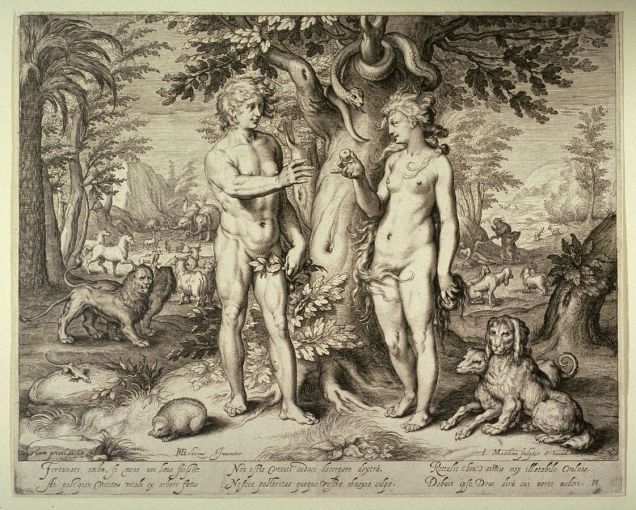
Adam and Eve 2

A couple weeks back I posted “ESS, Slavery, and the Metaphysic of Oppression”. After push back from various folks, it became clear that I needed to defend my claim that I am not an egalitarian while also demonstrating that Complementarianism can and should be divorced from the blasphemy of ESS. So I posted “Complementarity Without Subordination”. Aimee Byrd and Barbara Roberts were kind enough to read and even post fantastic and instructive responses: “Hierarchy and Subordination vs. Headship and Household Mission” and “Complementarity Without Subordination: What Does it Look Like?”  I also received very helpful and constructive comments from Rev. Sam Powell and Rachel Miller. I am more than honored to have received feedback from those that I have learned so much from. I’m even more honored to be considered part of the process of ironing out these important issues.

Along with many very generous and gracious words about the piece, the common critique from them all was of my insistence that the phrase “and he shall rule over you” in Genesis 3:16 is to be understood as the delegation of rightful authority rather than a description of oppressive authority. (Both Sam Powell and Rachel Miller had also written great pieces on different aspects of this subject: “Headship Is Not Hierarchy” and “The Desire of the Woman: A Response to Susan Foh’s Interpretation”.) So against my better judgement, I thought I ought to further defend/explain my position.  Yes, that’s right, take the one narrow band that all of them disagreed with and make it my whole next post; proof that I am not very intelligent.

Continue reading

Complementarity Without Subordination

o-ADAM-AND-EVE-facebook
Adam and Eve Gustav Klimt (Austrian, 1862–1918) 1917-1918 Oil on canvas *Belvedere, Vienna * © Belvedere, Vienna *Courtesy Museum of Fine Arts, Boston

Some Background and Statement of the Question

In my previous post, “ESS, Slavery, and the Metaphysic of Oppression,” I first rejected the simple metaphysic of “unequal in nature, therefore unequal in authority” as Biblically inapplicable to human relations.  I next noted that with the failure of the simple metaphysic, defenders of slavery within the Church turned to a metaphysic of “equal in nature, yet subordinate in subsistence”, or a metaphysic of the inequality of equals.  I next noted that Complementarians in modern evangelicalism have also turned to the metaphysic of “equal in nature, yet subordinate in subsistence” to rescue male headship from the feminist onslaught, but with a much more robust footing supplied by the supposed Eternal Subordination of the Son (ESS) teaching.  I rejected this position as well as a metaphysic of oppression, grounded as it is in Trinitarian error and the subordination of persons as to their very subsistence.

Of course the questions/push back from evangelicals has been to question how one could still believe in male headship in the home, as I do, yet reject both of the above metaphysical principles.  It is a good question and warrants more than a brief answer. If the metaphysic grounded in the ESS view of the Trinity is a metaphysic of oppression, then one must believe in the inequality of nature to maintain male headship, right?  And if one rejects both, then aren’t we left with egalitarianism as the only remaining option? I, of course, have no newfangled answer, nor my own special way of treating the subject; it has been treated better and more extensively by others.  Rather, I believe that the very asking of this question just shows how much subordinationist thought has infiltrated evangelicalism, so I hope only to point the reader in a different direction and perspective to continue studying the issue.

Continue reading

ESS, Slavery, and the Metaphysic of Oppression

George WHitfield

George Whitfield believed that “Africans” were human but subordinate creatures and as such could rightfully be enslaved. He saw this as an act of beneficence on behalf of the white Christian slave holder. In like manner, Robert Lewis Dabney, while discussing “natural equality” states the following:

[…]if the low grade of intelligence, virtue and civilization of the African in America, disqualified him for being his own guardian, and if his own true welfare (taking the “general run” of cases) and that of the community, would be plainly marred by this freedom; then the law decided correctly, that the African here has no natural right to his self-control, as to his own labour and locomotion. Hence, his natural liberty is only that which remains after that privilege is retrenched.[1]

While hideous, the metaphysic of such a position was simple: those unequal in nature, being, dignity, and attributes are also unequal in relations, including authority and submission, right to command and duty to obey. “Equality” only extends to the individuals as a requirement for equal duty before God—one to care for his subordinate and the other to obey his superior. Equity was simply the Golden Rule practiced according to one’s natural lot.

Continue reading

“Economic” Subordination of the Son? Part 1: Theologia and Oikonomia

cropped-img_bg_huge

[M]en have erred through a want of careful examination or consideration of the whole tenor of the Scriptures, and have endeavored to transfer those things which are said of Jesus Christ according to the flesh, to that substance of His which was eternal before the incarnation, and is eternal. (Augustine, On the Trinity, Bk. 1, Ch. 7.14)

In my earlier post, “Subordination of the Son, Ligonier, and the ‘Economic’ Trinity”, I noted how the revised Ligonier Statement on Christology included the phrase, “We deny the eternal subordination of the Son to the Father in the ontological Trinity,” apparently in response to the previous Summer’s Eternal Subordination of the Son (ESS) debate.  I noted that I was momentarily encouraged by this, but was then immediately struck by the fact that everyone on every side of the debate agrees with this statement as well!  Even the most visible proponent of ESS, Wayne Grudem, argues,

This truth about the Trinity has sometimes been summarized in the phrase “ontological equality but economic subordination,” where the word ontological means “being.” If we do not have ontological equality, not all the persons are fully God. But if we do not have economic subordination, then there is no inherent difference in the way the three persons relate to one another, and consequently we do not have the three distinct persons existing as Father, Son, and Holy Spirit for all eternity. For example, if the Son is not eternally subordinate to the Father in role, then the Father is not eternally “Father” and the Son is not eternally “Son.” This would mean that the Trinity has not eternally existed.

This is why the idea of eternal equality in being but subordination in role has been essential to the church’s doctrine of the Trinity since it was first affirmed in the Nicene Creed, which said that the Son was “begotten of the Father before all ages” and that the Holy Spirit “proceeds from the Father and the Son.” (Systematic Theology)

(Earlier in the text, Grudem defines the economic Trinity: “The ‘economy of the Trinity’ means the different ways the three persons act as they relate to the world and […] to each other for all eternity.”)

While there is so much wrong with these statements, what I would like to note here is: (1) Grudem, while fully endorsing the Eternal Subordination of the Son, would also fully agree with the words of the Ligionier statement; (2) Grudem believes that subordination properly resides within the eternal Trinity as economically conceived; and (3), he believes that this is the position of the Nicene Fathers, that there is subordination in the “economic” Trinity but equality in the “ontological” Trinity.

Continue reading

For the Calvinist Toolkit: An Outline for Answering Common Sovereignty, Freewill, and Responsibility Questions

16336364413_ab165c8a96_k

We’ve all had these questions (and we all continue to hear them):
“How can man be free if God foreordained all that comes to pass?”
“How can God be sovereign yet man still responsible for his own sin?”
“How can [something, something] predestined [something, something] sovereign [something, something] freewill?” While these are indeed quite complicated questions to answer in full (we can leave that to John Frame), I hope here to at least give a rough outline of how to answer that might be a handy addition to your Calvinist toolkit.

Continue reading

Subordination of the Son, Ligonier, and the “Economic” Trinity

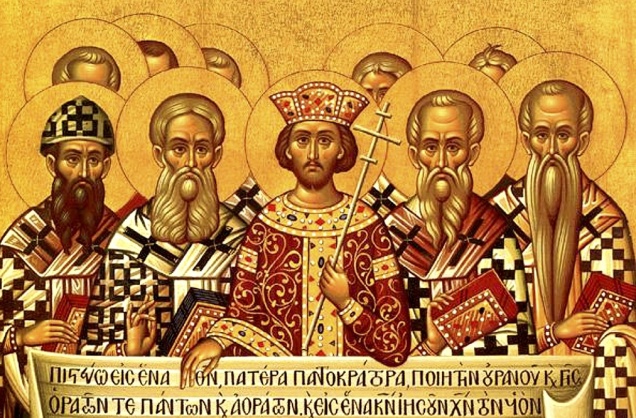
Nicaea_icon

To those for whom ESS (Eternal Subordination of the Son) or EFS (Eternal Functional Subordination) or ERAS (Eternal Relation of Authority and Submission) or (is that all of them?) does not ring a bell, the following may not be all that interesting. Though debated off and on for at least the last 20 years or so, the popular claim that the Son of God is equal to the Father yet subject to His authority in all eternity, has over the Summer of 2016 come under intense scrutiny; and rightly so. Confessionally Reformed Christians and scholars from many quarters have demonstrated this teaching to plainly run afoul of Nicene Orthodoxy, with the potential to shipwreck some of the very pillars of orthodox Trinitarian doctrine.

So I was (momentarily) delighted when Ligionier Ministries updated their Statement on Christology to include an addition to “Affirmations and Denials” Article 2 (in bold below):

We affirm that in the unity of the Godhead the eternally begotten Son is consubstantial (homoousios), coequal, and coeternal with the Father and the Holy Spirit.

We deny that the Son is merely like God (homoiousios) or that He was simply adopted by the Father as His Son. We deny the eternal subordination of the Son to the Father in the ontological Trinity.

My delight quickly evaporated, however, when my very next thought was, “So does Wayne Grudem!”, the popularizer-in-chief of ESS/EFS/ERAS. He and most all proponents of the teaching also deny that the subordination or submission to authority is according to the Trinity as ontologically conceived. They point out consistently that such a position would constitute classic, literal, Arianism—to which we must agree.

Continue reading

Hastening the Day

15778035110_eff2562060_b

I recently ordered a copy of Nicaea and its Legacy, by Lewis Ayres, as a bit of a Christmas present for myself during the recent Advent season.  Having been exercised by all things Trinitarian since the summer’s public, but rather niche, subordination debate, I was assured by reviewers and experts alike that this book was sure to scratch my growing itch to understand the third and fourth century Nicene controversy better.  While I would certainly love to discuss, over the next (hopefully under-eighteen hundred) words, the complexities of Pro-Nicene theology, what is more pertinent to my present task (and much more within my ken) is rather the shipping method of this order. It, unfortunately, was not an Amazon Prime order.  In other words, who knows when this book would actually arrive!

I received a shipping confirmation within only hours; yes, exciting, off to a good start.  The range for expected delivery was something like three to twenty one days, so naturally, it being a Saturday, I expected it by Wednesday.  Well, no book come Wednesday.  I rapidly became agitated checking my account over and over, looking for shipping updates, to no avail—I mean, come on, at least throw a guy a tracking number!  Of course I emailed the seller asking for delivery information, but only to receive a worthless cookie cutter email in return.  Eventually I did find that it was at a mail distribution center, but it seemed to be sitting there for days as I meticulously kept tabs.  How could they allow this gem to just languish in a pile in some warehouse in Maryland?  This near obsessive behavior of mine went on for days (just ask my wife!), but I will kindly spare you the rest of the details of this harrowing first world drama. There is, Lord willing, a point to it.

Continue reading

A Layman’s Perspective on Creation and Evolution

As it becomes ever more clear that the tide is turning in the Reformed world toward various forms of Theistic Evolution, I find myself in increasingly deep and troubled water as a layman and a (relatively) Young Earth Creationist. I very much would love to sink back into the plush easy chair of academic concord, prepared so comfortably by Kline, Waltke, Walton, BioLogos, and the like, but I simply find it impossible to do so. Yes, I am familiar these authors’ work—the first question I am always asked when I come clean on my archaic disposition is, “haven’t you read The Lost World of Genesis?” No, my friend and brother, I do not hold to my position because I can’t distinguish genres, or don’t have knowledge of ANE texts. Nor is it that I reject science as an enemy of the Gospel; in fact, I love science and am not among those who think scientists are proceeding on fundamentally false assumptions and/or methods. Rather, whether I like it or not, I find myself inexorably and inescapably conscience bound to (among others) the following four maxims:

1. I want my statements and beliefs to conform to the Law, the Prophets, Jesus, and the Apostles:

Creation:

Exodus 20: 11: For in six days the LORD made the heavens and the earth, the sea, and all that is in them, but he rested on the seventh day.

2 Peter 3:4‐5: They will say, “Where is the promise of his coming? For ever since the fathers fell asleep, all things are continuing as they were from the beginning of creation.” For they deliberately overlook this fact, that the heavens existed long ago, and the earth was formed out of water and through water by the word of God

Adam and Eve:

1 Chronicles 1:1‐4: Adam, Seth, Enosh; Kenan, Mahalalel, Jared; Enoch, Methuselah, Lamech; Noah, Shem, Ham, and Japheth.

Hosea 6: 7: But like Adam they transgressed the covenant; there they dealt faithlessly with me. Luke 3: 38: […]the son of Enos, the son of Seth, the son of Adam, the son of God.

Matthew 19: 4‐6: He answered, “Have you not read that he who created them from the beginning made them male and female, and said, ‘Therefore a man shall leave his father and his mother and hold fast to his wife, and the two shall become one flesh’? So they are no longer two but one flesh. What therefore God has joined together, let not man separate.”

Acts 17: 26: And he made from one man every nation of mankind to live on all the face of the earth[…].

Romans 5: 12‐14: Therefore, just as sin came into the world through one man, and death through sin, and so death spread to all men because all sinned—for sin indeed was in the world before the law was given, but sin is not counted where there is no law. Yet death reigned from Adam to Moses, even over those whose sinning was not like the transgression of Adam, who was a type of the one who was to come.

1 Corinthians 11: 8‐9: For man was not made from woman, but woman from man. Neither was man created for woman, but woman for man.

1 Corinthians 15: 45‐49: Thus it is written, “The first man Adam became a living being”; the last Adam became a life‐giving spirit. But it is not the spiritual that is first but the natural, and then the spiritual. The first man was from the earth, a man of dust; the second man is from heaven. As was the man of dust, so also are those who are of the dust, and as is the man of heaven, so also are those who are of heaven. Just as we have borne the image of the man of dust, we shall also bear the image of the man of heaven.

1 Timothy 2: 13‐14: For Adam was formed first, then Eve; and Adam was not deceived, but the woman was deceived and became a transgressor.

Jude 1: 14: It was also about these that Enoch, the seventh from Adam, prophesied[…].

The Flood:

Isaiah 54: 9: “This is like the days of Noah to me: as I swore that the waters of Noah should no more go over the earth, so I have sworn that I will not be angry with you, and will not rebuke you.

Luke 17: 26‐27: Just as it was in the days of Noah, so will it be in the days of the Son of Man. They were eating and drinking and marrying and being given in marriage, until the day when Noah entered the ark, and the flood came and destroyed them all.

1 Peter 3: 20: because they formerly did not obey, when God’s patience waited in the days of Noah, while the ark was being prepared, in which a few, that is, eight persons, were brought safely through water.

2 Peter 2: 5: if he did not spare the ancient world, but preserved Noah, a herald of righteousness, with seven others, when he brought a flood upon the world of the ungodly[…].

2 Peter 3: 5‐6: For they deliberately overlook this fact, that the heavens existed long ago, and the earth was formed out of water and through water by the word of God, and that by means of these the world that then existed was deluged with water and perished.

(And we could sprinkle in many passages assuming the historicity of Cain and Abel.)

As a believer in the inspired word of God, I want to think His thoughts after Him and unequivocally reflect the beliefs, statements, and language of His inspired authors and, consequently, share in their derived logical and moral conclusions and corollaries. I want to say with Moses that God created the world and everything in it in the space of six days. I want to say this unequivocally, even if I can’t answer specifically whether we are speaking of clock time or just “morning and evening” as we know it. I want to say with Peter that the earth was formed out of water.

I want to say that Adam was the very first Man, formed from the dust by direct act of creation, receiving the breath of life directly from God; that he was made before Eve, that all mankind descends from these very two people, that all sin and corruption come from these two primordial parents. I want to say that their children were Cain and Abel and that Cain killed Abel and Seth was born and the division between the church and the fallen world persists from thence and contains all mankind‐‐even if I don’t know if the genealogies are 100% complete.

I want to agree with Isaiah, Jesus, and Peter that the whole world was deluged, killing everyone but those in the Ark, just as was proclaimed in Genesis. There is nothing in God’s word to suggest otherwise.

2. The consensus of modern scientists does not just call Genesis 1 into question.

Next, it seems odd to me that we can call in the scientific experts and believe them to be utterly persuasive and even authoritative right up until we don’t want to give something up. We cannot consistently have our cake and eat it to. Scientists speak plainly to the formation of man via biogenesis. There ought to be a vast number of transitional beings, many non‐humans who even used tools, lived in community, buried their dead, etc. And there is no one‐man link to all of mankind. There is no first man and then first woman formed after. The civilizations discussed after are considered anachronistic. Cain and Abel are questioned. There was no global flood. Etc.

I mean, we must get serious here and adopt the real consensus, not just the parts we like. If we take just part of the consensus and dump the rest, what is the basis for this selection? If the consensus claims one thing and we reject it, then it says another and we accept it, by what method are we making the determination? And we don’t need to stop here.

What is the scientific community’s consensus on: Psycho‐physical causation?
Incorporeal Spirit acting on the human “heart” and mind? The actual efficacy of prayer?

The word of God through providence upholding the universe and directing its every detail?

The thoughts and emotions of a human continuing on after the nervous system and neurons have returned to dust?

Bodily resurrection after days of clinical death, corruption, and deterioration?

A physical body ascending to a spiritual location?

We could go on like this. E.g., the Sun stopping in the sky? The many miracles of the Bible? Why are some conclusions of the scientific community hard fast and unquestionable, requiring us to gloss the statements of Biblical authors, but others are just held to be out of court?

3. Science does not lay bare fundamental reality.

From Vern Poythress’, “Three Modern Myths”:

The grand popular myth is that modern science exposes the way things “really are,” as opposed to the mistaken character of appearances. According to this grand myth, the “reality” is that the earth moves, and only falsely “appears” to be unmoving. A solid‐looking table is mostly empty space between elementary particles, and only falsely appears to be solid. A rainbow is really light waves of various frequencies, and only appears to be beautiful colors to our eyes. Our mind is really the electrical and chemical firing of neurons, and only appears to have thoughts.

This grand myth constitutes an extended metaphysical statement about what is real and what is not. According to this myth, current science allegedly provides ultimate metaphysical answers. We may call this myth the myth of scientistic metaphysics.

To refute this grand myth takes metaphysical reflection, more than we can do here.18 But we can at least observe that the grand myth is ill‐grounded. The work in specialized sciences uncovers additional “layers” of meaning of which we were previously unaware—for example, the microscopic level, the macro‐level of astronomy and cosmology, and layers in biology, geology, meteorology, chemistry, and physics. That in itself does not imply that the initial, “phenomenal” layers of ordinary observation are “unreal.” The “unreality” of appearances follows only if we have a metaphysical principle of reductionism, which says that science gets to the “bottom,” the “real” foundation of being, and that everything above the bottom is unreal in relation to the bottom.

This metaphysics has no real warrant based on details of scientific investigation, but is a groundless assumption that is imposed on the investigation as an interpretation of its metaphysical significance. In other words, we have here an instance of credulity, faith without grounds. The metaphysical claim has credibility partly because it is socially transmitted from one person to another, and the modern atmosphere is such that few people question the key assumption.

(I definitely suggest reading the full article for further elaboration, http://frame‐poythress.org/three‐ modern‐myths‐in‐interpreting‐genesis‐1/)

Scientific inquiry is by definition methodologically materialistic. It is not a decision to be so, it simply is what science is, what we actually want it to be, and what it should be. With that being so, we cannot expect it to answer fundamental metaphysical questions. I mean, theoretically God could have created everything as it is moments ago, with all of our memories built into our brains in our present neural state, the history books full, etc., and no matter how much testing and inquiry, we could not prove that it were so or not. This is no Last Tuesday‐ism; it simply makes plain that science cannot deal in the

metaphysical and it should not. Scientists should indeed do retrodiction, but should not then dogmatically claim that they have shown, in absolute terms, what did in fact occur.

4. The history of scientific investigation and age hubris.

I often imagine myself in the time of Aristotle saying, “we know that Moses’s account can’t be literal because we know exactly how the universe is constructed with earth at the center, then water around that, air around that, fire above that, and deities spinning the lights locked into the crystalline spheres above. We understand physics and that gravity is earthy materials desiring to be in their place at the center, fire rising because it desires to be in its place above, etc. And we’ve learned from Democritus where all animal life has come from, including humans, via congealing atoms…” and the like.

Every generation has its hubris. Each succeeding generation is sure that they have laid bare the “truth” and that previous generations just operated on mythology, not having seen the true truth as “we do”. This has happened all throughout history, in cosmology, biology, mathematics‐‐everything. Plato to Aristotle to Ptolemy to Copernicus to Newton to Einstein to Quanta to…. Just study the development of Geometry. It was impossible to imagine anything but Euclid, until Bolyai‐Lobachevsky. It was unthinkable, literally, until it was forced through crisis!

So for me, I would not be so bold as to declare confidently on ultimate questions relating to God, His word, and His world based upon the current intellectual climate I happen to find myself in, or I may end up being just like the imaginary “fool” in the above example from Aristotle.


Photo Credit
Beth Scupham on Flickr
Attribution 2.0 Generic (CC BY 2.0)