Addendum: I Believe Systemic Racism Exists Because of Biblical Anthropology, Hamartiology, and Soteriology

biblical anthropology

[T]here is nothing wrong with Black people as a group, or with any other racial group. That is what it truly means to think as an antiracist: to think there is nothing wrong with Black people, to think that racial groups are equal. There are lazy and unwise and harmful individuals of African ancestry. There are lazy and unwise and harmful individuals of European ancestry. There are industrious and wise and harmless individuals of European ancestry. There are industrious and wise and harmless individuals of African ancestry. But no racial group has ever had a monopoly on any type of human trait or gene—not now, not ever. Under our different-looking hair and skin, doctors cannot tell the difference between our bodies, our brains, or the blood that runs in our veins. […] Black Americans’ history of oppression has made Black opportunities—not Black people—inferior. (Stamped From the Beginning, p. 11)

Introduction

As I’ve stated before, the existence of SYSTEMIC OR INSTITUTIONALIZED RACISM, i.e., “polices, practices, and procedures of institutions that have a disproportionately negative effect on racial minorities’ access to and quality of goods, services, and opportunities” (Vernellia R. Randal), is a simple deduction from three premises:

  1. Well documented and vast social and economic disparities between black and white Americans, including de facto neighborhood, school, and church segregation.
  2. All racial groups are equal; in Ibram X Kendi’s words, “no racial group has ever had a monopoly on any type of human trait or gene—not now, not ever.”
  3. The majority of Americans are not overt racists, members of a neo-Nazi party, or intentionally discriminating against black Americans due to conscious prejudice and hatred.

Continue reading

Galatians 3:28 and Colossians 3:11 do NOT Preclude Justice Advocacy

Dude reading Bible

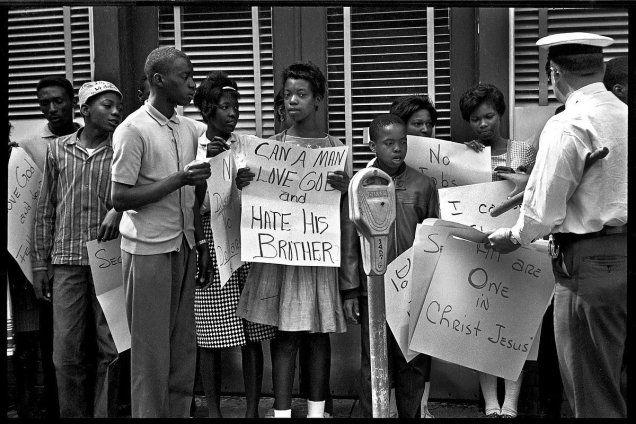
There is neither Jew nor Greek, there is neither slave nor free, there is no male and female, for you are all one in Christ Jesus. (Gal. 3:28)

Here there is not Greek and Jew, circumcised and uncircumcised, barbarian, Scythian, slave, free; but Christ is all, and in all. (Col. 3:11)

I’ve become more and more baffled how passages like Galatians 3:28 and Colossians 3:11 have been used to oppose advocates of racial justice and reconciliation in the Church. The idea seems to be that since all believers are one in Christ and our identity and unity is to be found in Him alone, then even bringing up race in the Church is itself a source of division, such distinctions having been wiped away by the death, resurrection, and ascension of our Lord. For example, we read the following popular expression of the claim:

Continue reading

A Quibble: White Evangelicals Are Not Anti-Structuralist

Div by Faith 2

The racially important cultural tools in the white evangelical tool kit are “accountable freewill individualism,” “relationalism” (attaching central importance to interpersonal relationships), and anti-structuralism (inability to perceive or unwillingness to accept social structural influences). (Divided by Faith, p. 76)

When I first read Smith and Emerson’s book, Divided by Faith (a must read), this section stood out above all else. I had wondered why the concept of structural, systemic, or institutional racism was so forcefully dismissed by white evangelicals in general, and opponents of racial reconciliation in particular. The concept of a “tool kit,” stocked with limited methods of interpretation (even conceptualization), populated by fundamental beliefs and assumptions found within evangelical ideology itself, seemed a welcome explanation for the obvious hostility toward structural explanations. The logic seemed simple. Evangelicalism rightly sees salvation as an individual affair (though often with illegitimate emphasis); God saves sinners from sin; sin is the ultimate problem; only individuals can sin or be saved from sin; racism is wrong because it is sin; therefore, racism is also only an individual affair. As such, evangelicals can only process racism as an individual attitude or as individual actions. Evangelicals simply have no interpretive category for institutionalized, systemic, or structural racism. It makes perfect sense.

Continue reading

Color-Blindness is Poll Taxes, Literacy Tests, and Grandfather Clauses (A Quick Thought)

poll tax

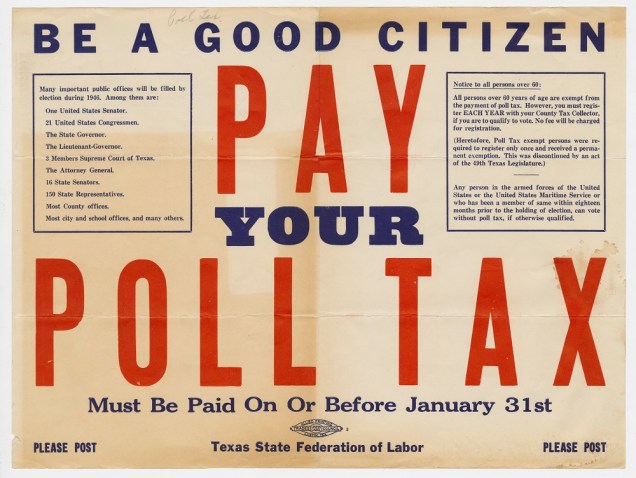
Article 12, Mississippi State Constitution (1890):

Sec. 243. A uniform poll tax of two dollars, to be used in aid of the common schools, and for no other purpose, is hereby imposed on every male inhabitant of this State between the ages of twenty-one and sixty years, except persons who are deaf and dumb or blind, or who are maimed by loss of hand or foot; said tax to be a lien only upon taxable property. The board of supervisors of any county may, for the purpose of aiding the common schools in that county, increase the poll tax in said county, but in no case shall the entire poll tax exceed in any one year three dollars on each poll. No criminal proceedings shall be allowed to enforce the collection of the poll tax.

Sec. 244. On and after the first day of January, A. D., 1892, every elector shall, in addition to the foregoing qualifications, be able to read any section of the constitution of this State; or he shall be able to understand the same when read to him, or give a reasonable interpretation thereof. A new registration shall be made before the next ensuing election after January the first, A.D., 1892.

Continue reading

What Is & Isn’t Being Said: 9. Narrow Spirituality, the Black Church, and Systemic Racism

nsoc 2

This is a continuation of our last post, “What Is & Isn’t Being Said: 8. Systemic Racism & the Narrow Spirituality of the Church.”

Meanwhile, a very different understanding of the mission and role of the Church had grown up in the United States. From the time African Americans began forming their own churches and denominations in the 18th century—due to abuse, violence, persecution, and egregious violations of the Communion of the Saints—they consistently rejected this narrow spirituality view, and for what should be very obvious reasons. The hypocrisy of the American Church was never lost on African Americans, whether slave or free, nor the spuriousness of their truncated “gospel.”

Continue reading

What Is & Isn’t Being Said: 8. Systemic Racism & the “Narrow” Spirituality of the Church

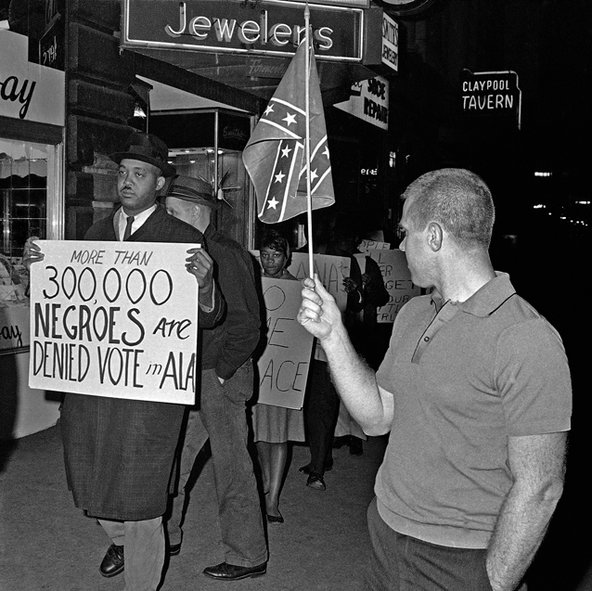
voting protest and white guy

[To be fair, this is a long post, and it ends with “To be continued….” I do believe this is one of the most important discussions within modern conservative evangelicalism, so if you have the time and inclination, I believe you will be rewarded.]

Introduction

To me, the existence of systemic or institutionalized racism, i.e., “polices, practices, and procedures of institutions that have a disproportionately negative effect on racial minorities’ access to and quality of goods, services, and opportunities” (Vernellia R. Randal), is a simple deduction from three premises:

  1. Well documented and vast social and economic disparities between black and white Americans, as well as continued neighborhood and church segregation.
  2. All racial groups are equal; in Ibram X Kendi’s words, “no racial group has ever had a monopoly on any type of human trait or gene—not now, not ever.”
  3. The majority of Americans are not overt racists, members of a neo-Nazi party, or intentionally discriminating against black Americans due to conscious prejudice and hatred.
If we are committed to the truth of the above three premises, then we must begin to look for explanations that do not—intentionally or unintentionally—assume the inferiority of any race. And a very short walk back through history gives us all the data we need: four hundred years of legal and de facto marginalization for the sake of exploitation accords perfectly with the circumstances we find ourselves in today; in fact, how could we expect it to be otherwise? Truly, God has been fantastically kind to this Nation, given our history. Much worse circumstances could have justly been predicted.

Example of Systemic Racism: “Narrow” Spirituality of the Church (NSoC)

I had promised in “What Is & Isn’t Being Said: 7. Individual vs. Institutional Racism” to give specific examples of systemic racism, both from church and society, to further explicate the concept. But I have decided here, rather, to focus solely on the church—particularly the Reformed and Presbyterian Church, of which I am a member.

Continue reading

Saved DESPITE the Masters’ “Gospel”: “…there the preachers only preach what will be agreeable to your masters.”

Francis Fedric Book

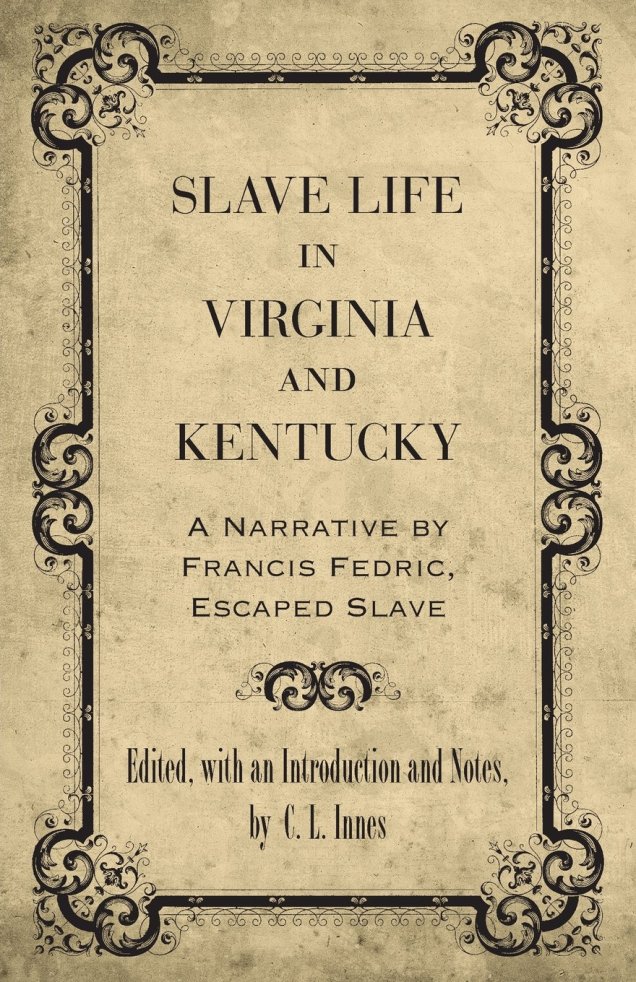
The following is from Francis Fedric’s Slave Life in Virginia and Kentucky (1863), wherein he describes his own conversion to Christianity. It is just more confirmation of Peter Randolph’s conclusion quoted at length in an earlier post: “[a]fter such preaching, let no one say that the slaves have the Gospel of Jesus preached to them.”

Continue reading

Christian Racial Reconciliation, “Calvinism,” and the Unbeliever : A Clarification

People

[The following is yet another clarification added to our series, “What Is & Isn’t Being Said.” And please note, “Calvinism” is in quotes; I believe everything that follows is consistent with a proper understanding of Reformed doctrine.]

One of the possible pitfalls of the Christian argument for racial and ethnic reconciliation (RR), especially among those of the Reformed or Calvinistic tradition (of which I am a member), is the potential implication that only believers, i.e., those in Christ, are included in the scope of sought social equity and justice. Of course, RR advocates acknowledge that all men are created in the very image and likeness of God; that is,

the whole human being is image and likeness of God, in soul and body, in all human faculties, powers, and gifts. Nothing in humanity is excluded from God’s image; it stretches as far as our humanity does and constitutes our humanness. (Herman Bavinck)

But when it comes to the idea of “reconciliation” itself, the argument usually moves from the reconciliation between God and man wrought by Christ on the Cross to reconciliation between man and man premised on the same. In the words of the Apostle,

Continue reading

Rev. Peter Randolph: The “Gospel” of the Slave Master and the “Benevolence” of Slavery

bassard_des_cov_mocks_001.indd

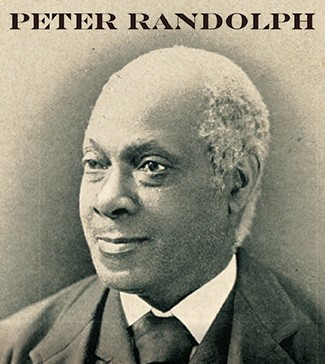
In his autobiography, From Slave Cabin to the Pulpit, Rev. Peter Randolph (1825 – 1897) answers the claim that slavery was good for the African, freeing him from the bonds of paganism, bringing him to Gospel salvation. To be sure, there was a “gospel” preached to them; but was it the true Gospel of our Lord Jesus Christ, or a truncated facsimile, bastardized for the sake of exploitation?

Continue reading

Kendi on Perkins on Slavery

Perkins

Ibram X Kendi writes in Stamped From the Beginning,

The Puritans believed, too, in civilizing and Christianizing the world, but their approach to the project was slightly different from that of most explorers and expedition sponsors. For the others, it was about economic returns or political power. For Puritan preachers, it was about bringing social order to the world. Cambridge professor William Perkins rested at the cornerstone of British Puritanism in the late sixteenth century. “Though the servant in regard of faith and the inner man be equal to his master, in regard of the outward man… the master is above the servant,” he explained in Ordering a Familie, published in 1590. In paraphrasing St. Paul, Perkins became one of the first major English theorists—or assimilationist theologians, to be more precise—to mask the exploitative master/servant or master/slave relationship as a loving family relationship. […] It was Perkins’s family ordering that Puritan leaders like John Cotton and Richard Mather used to sanction slavery in Massachusetts a generation later. And it was Perkins’s claim of equal souls and unequal bodies that led Puritan preachers like Cotton and Mather to minister to African souls and not challenge the enslavement of their bodies. (Kindle location 581)

This is 100% true and a powerful point necessary for understanding the genesis, development, and justification of American chattel slavery. But, like a good little student of Kendi, I went back to the primary source, Perkins’ A SHORT SURVEY OF THE RIGHT MANNER OF ERECTING and ordering a Familie, according to the Scriptures.

Continue reading