Some Quick Reminders of what TULIP is NOT

Tulip Exposures, J. Wehtje X-ray Black and White Flowers 16x20 Print 1

The doctrines summarized by the acronym “TULIP” have become to many the hallmark doctrines of the Reformed faith, even called the “Five Points of Calvinism” by some. In reality, this acronym is rarely heard in Reformed churches or found in Reformed literature.  To the Reformed, Total Depravity, Unconditional Election, Limited Atonement, Irresistible Grace, and Perseverance of the Saints are not the core of Christianity, nor even the core soteriology of Christianity, but rather five doctrinal clarifications produced by the Synod of Dordt in response to a group of Dutch ministers questioning important suppositions of the Heidelberg Catechism. While they are indeed very important truths, they do not eclipse the total system of doctrine as received in the Reformed Confessions.

But, as pervasive as this caricature of the Reformed Faith is, even more troubling is that these doctrines themselves are often presented as but poor caricatures of the actual Canons produced at Dordt—even by many who claim to profess them. I have thought it helpful here to write a few quick reminders of what TULIP is not, historically speaking.

Continue reading

The Semi-Arianism of ESS Arguments

Holy+Council+of+Nicea

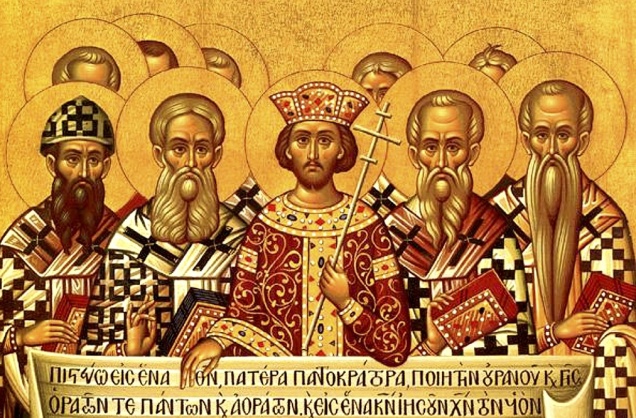
Proponents of the Eternal Subordination of the Son (ESS) are indeed aware of and openly opposed to the Semi-Arian teaching of an ontological subordination of the Son to the Father, that is, a subordination and hierarchy within the very nature, essence, or being of God; for such a position clearly contradicts the Nicene Creed, dividing the one Nature and Will of God, calling into question the co-equality of the Persons. Rather, they locate this subordination and hierarchy of authority within relations of function or role amongst the persons of the Godhead. This, they claim, distinguishes their position from the Arian heresy and shields them from their critics. As Bruce Ware puts it,

Continue reading

“But He Who Sends is Greater Than He Who is Sent”: Augustine Answers Definitively

Augustine 2

But being proved wrong so far, men betake themselves to saying, that he who sends is greater than he who is sent: therefore the Father is greater than the Son, because the Son continually speaks of Himself as being sent by the Father; and the Father is also greater than the Holy Spirit, because Jesus has said of the Spirit, Whom the Father will send in my name; and the Holy Spirit is less than both, because both the Father sends Him, as we have said, and the Son, when He says, But if I depart, I will send Him unto you. (St. Augustine, On the Trinity, 2.5.7)

By this point in the treatise, Augustine has demonstrated the unity of the Divine nature and will, the trinity of Persons, the full divinity of each, the order of processions, the one inseparable order of working, the double account of the savior (the “canonical rule”), and is in process of answering objections to the full co-equality of the Persons.

In our day, the above objection is not so much cast in the language of greater/lesser, but in the language of authority/submission. That the Son is sent by the Father “proves” that the Son was in subordination to the Father in eternity (“functionally” or otherwise). On the face of it, the claim looks quite reasonable and even Biblical.  Clearly Christ says He is sent of the Father, and each together send the Spirit.  And we are familiar with passages such as the following:

Continue reading

No, ESS is not a Baptist Cabal

BrownHallPrincetonUniversity

I was reminded recently of the article “Why the Trinitarian Controversy Was Inevitable,” wherein Dr. Christopher Cleveland argues that the current Eternal Subordination of the Son (ESS) controversy was an inevitable result of the failures of modern academia, specifically noting the failures of Southern Baptist seminaries.  He refers, e.g., to SBTS’s replacing doctrinally unsound professors with conservative Biblicist professors in response to rising theological liberalism:

Because of this clash between the conservatives and the liberals within theological institutions of the time, there emerged an entire group of evangelical scholars who were trained in seminaries or in other related fields but were not trained in a way that cultivated in them an appreciation for the task of traditional dogmatics. Whether for reasons of neglect in their theological training under more critical theologians or because of their purposeful avoidance of dogmatics in favor of Biblical studies, a generation of evangelical scholars arose who had no serious acquaintance with the classical categories of theology developed in Patristic, Medieval, and Reformed orthodox thought. Nor did they have allegiance to those categories. What mattered in the fight against liberalism, in the minds of so many, was the Bible, not theology.

Elsewhere in academia, he continues, there was a resurgence of scholarship focusing on more dogmatic studies, working from traditional Reformed Scholastic categories.  The inevitable then occurred: to put it bluntly, the poorly educated Biblicist Baptists, incapable of testing doctrines by historic categories due to poor training or inattention, found themselves on a collision course with the Reformed orthodox likes of Carl Trueman and Willem J. Van Asselt over Trinitarian doctrine.

Continue reading

“Economic” Subordination of the Son? Part 2: the Pactum Salutis

john-owen

In this post, I intend to move beyond the theologia/oikonomia distinction of use Class 1 and begin to piece together the developments that led to our current usage of the distinction (Classes 2 and 3), at each step assessing the orthodoxy of the claim that the Son is economically subordinate to the Father in eternity.  I will focus largely on the works of Herman Witsius and John Owen due to their popular work on the Pactum Salutis and the corresponding expansion of the oikonomia beyond the use of the Fathers. Also, an important contrast between these two great theologians will prove polemically valuable to our study as they differ on the implications of their shared doctrine re: the subordination of the Son to the Father.

“Economic” Subordination of the Son? Part 2: the Pactum Salutis

We began this study by considering the revised Ligonier Statement on Christology’s inclusion of the clause, “We deny the eternal subordination of the Son to the Father in the ontological Trinity,” noting the debilitating ambiguity of the denial.  There are simply too many ways that theologians define the ontological/economical distinction such that the most ardent opponents of the Eternal Subordination of the Son (ESS) as well as its most ardent proponents can affirm the Statement’s denial. I went on to identify three different use classes of the distinction as found most commonly among those discussing ESS:

Class 1. The “economy” as in the oikonomia employed by the Church Fathers in contrast to the theologia.

Class 2. The “economy” as in the Economic Trinity, “the activity of God and the roles of the three persons with regard to creation and redemption,” as contrasted with the Immanent Trinity, “the Trinity in itself, without regard to God’s works of creation and redemption” (via Ligionier).  The former is the Trinity considered in se, as God is in His inner most life and being and the latter as He is considered ad extra in His works and operations revealed in history.

Class 3. The ESS usage of “economy,” which includes all of Class 2 Economic Trinity, but also illicitly includes the internal, interpersonal, relations of the Trinity.

(I say “use classes” because the defining edges of these groupings are admittedly rough.)

Continue reading

ESS, Slavery, and the Metaphysic of Oppression

George WHitfield

George Whitfield believed that “Africans” were human but subordinate creatures and as such could rightfully be enslaved. He saw this as an act of beneficence on behalf of the white Christian slave holder. In like manner, Robert Lewis Dabney, while discussing “natural equality” states the following:

[…]if the low grade of intelligence, virtue and civilization of the African in America, disqualified him for being his own guardian, and if his own true welfare (taking the “general run” of cases) and that of the community, would be plainly marred by this freedom; then the law decided correctly, that the African here has no natural right to his self-control, as to his own labour and locomotion. Hence, his natural liberty is only that which remains after that privilege is retrenched.[1]

While hideous, the metaphysic of such a position was simple: those unequal in nature, being, dignity, and attributes are also unequal in relations, including authority and submission, right to command and duty to obey. “Equality” only extends to the individuals as a requirement for equal duty before God—one to care for his subordinate and the other to obey his superior. Equity was simply the Golden Rule practiced according to one’s natural lot.

Continue reading

“Economic” Subordination of the Son? Part 1: Theologia and Oikonomia

cropped-img_bg_huge

[M]en have erred through a want of careful examination or consideration of the whole tenor of the Scriptures, and have endeavored to transfer those things which are said of Jesus Christ according to the flesh, to that substance of His which was eternal before the incarnation, and is eternal. (Augustine, On the Trinity, Bk. 1, Ch. 7.14)

In my earlier post, “Subordination of the Son, Ligonier, and the ‘Economic’ Trinity”, I noted how the revised Ligonier Statement on Christology included the phrase, “We deny the eternal subordination of the Son to the Father in the ontological Trinity,” apparently in response to the previous Summer’s Eternal Subordination of the Son (ESS) debate.  I noted that I was momentarily encouraged by this, but was then immediately struck by the fact that everyone on every side of the debate agrees with this statement as well!  Even the most visible proponent of ESS, Wayne Grudem, argues,

This truth about the Trinity has sometimes been summarized in the phrase “ontological equality but economic subordination,” where the word ontological means “being.” If we do not have ontological equality, not all the persons are fully God. But if we do not have economic subordination, then there is no inherent difference in the way the three persons relate to one another, and consequently we do not have the three distinct persons existing as Father, Son, and Holy Spirit for all eternity. For example, if the Son is not eternally subordinate to the Father in role, then the Father is not eternally “Father” and the Son is not eternally “Son.” This would mean that the Trinity has not eternally existed.

This is why the idea of eternal equality in being but subordination in role has been essential to the church’s doctrine of the Trinity since it was first affirmed in the Nicene Creed, which said that the Son was “begotten of the Father before all ages” and that the Holy Spirit “proceeds from the Father and the Son.” (Systematic Theology)

(Earlier in the text, Grudem defines the economic Trinity: “The ‘economy of the Trinity’ means the different ways the three persons act as they relate to the world and […] to each other for all eternity.”)

While there is so much wrong with these statements, what I would like to note here is: (1) Grudem, while fully endorsing the Eternal Subordination of the Son, would also fully agree with the words of the Ligionier statement; (2) Grudem believes that subordination properly resides within the eternal Trinity as economically conceived; and (3), he believes that this is the position of the Nicene Fathers, that there is subordination in the “economic” Trinity but equality in the “ontological” Trinity.

Continue reading

Subordination of the Son, Ligonier, and the “Economic” Trinity

Nicaea_icon

To those for whom ESS (Eternal Subordination of the Son) or EFS (Eternal Functional Subordination) or ERAS (Eternal Relation of Authority and Submission) or (is that all of them?) does not ring a bell, the following may not be all that interesting. Though debated off and on for at least the last 20 years or so, the popular claim that the Son of God is equal to the Father yet subject to His authority in all eternity, has over the Summer of 2016 come under intense scrutiny; and rightly so. Confessionally Reformed Christians and scholars from many quarters have demonstrated this teaching to plainly run afoul of Nicene Orthodoxy, with the potential to shipwreck some of the very pillars of orthodox Trinitarian doctrine.

So I was (momentarily) delighted when Ligionier Ministries updated their Statement on Christology to include an addition to “Affirmations and Denials” Article 2 (in bold below):

We affirm that in the unity of the Godhead the eternally begotten Son is consubstantial (homoousios), coequal, and coeternal with the Father and the Holy Spirit.

We deny that the Son is merely like God (homoiousios) or that He was simply adopted by the Father as His Son. We deny the eternal subordination of the Son to the Father in the ontological Trinity.

My delight quickly evaporated, however, when my very next thought was, “So does Wayne Grudem!”, the popularizer-in-chief of ESS/EFS/ERAS. He and most all proponents of the teaching also deny that the subordination or submission to authority is according to the Trinity as ontologically conceived. They point out consistently that such a position would constitute classic, literal, Arianism—to which we must agree.

Continue reading