What Does “Jew & Gentile” Have to do With “Black & White”? : A Clarification

Crowd_divided

Please see the previous post, “‘Racism Isn’t the Problem, Sin is the Problem!’ : A Brief Clarification,” for some needed context for what follows here.

What Does “Jew & Gentile” Have to do With “Black & White”?

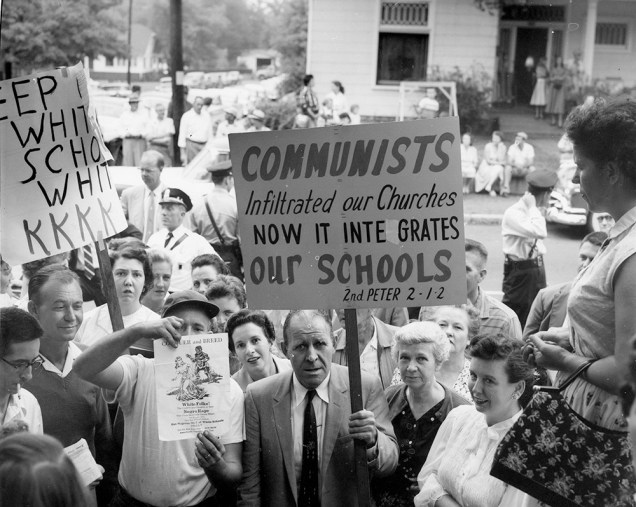
The Jew/Gentile conflict throughout the New Testament is often either (1) leveraged to prove there should be no recognition of race and ethnicity in Christ (“no Jew, no Gentile”), or (2) is denied to have anything to do with race and ethnicity since it is properly a covenantal/religious conflict. Others—those I’d agree with—see this conflict as an indispensable Biblical example of both definitive unity in Christ and a call to seek progressively lived unity in the Body. I hope, in what follows, to provide some clarity to the similarities and differences between the New Testament Jew/Gentile conflict and the White/Black conflict we have inherited in the United States.

Continue reading

“Racism Isn’t the Problem, Sin Is the Problem!” : A Brief Clarification

seeing-clearly

A few questions have come up over and over while discussing the issue of racial and ethnic reconciliation, so I’ve thought it best to pause my “What Is & Isn’t Being Said” series to offer some brief clarifications. Each should be taken quite narrowly, as addressing only that which is mentioned. E.g., below, this clarification does not address the wider social applications beyond the body of Christ, which will be addressed later. It also does not address the history of those who knew and preached the gospel, yet nevertheless promoted, defended, and preserved racist ideas.

“Racism Isn’t the Problem, Sin Is the Problem!” : A Brief Clarification

The problem isn’t ‘racism’, or any other ‘ism’ for that matter, but the congenital sin nature we each bear in our heart. The gospel makes this perfectly clear, particularly in Mark 7:17-23. Racism is ‘dealt with’ the same as any other sin. This is not rocket science, folks. SMH! (Darrell B. Harrison via Twitter)

I do not intend to pick on Mr. Harrison in particular, but his statement above does reflect a common sentiment among evangelicals. “Racism isn’t the problem, sin is the problem, and only the gospel can change the heart”; or, “racism is sin, and the only remedy for sin is the gospel.” Statements such as these seem quite correct on the surface. It is certainly true that all sin is from the heart. It is also true that only Jesus can change the heart. And it is true that the gospel is the only ultimate remedy for sin. But it seems odd, at least to me, to then conclude that a retelling of the gospel—in most evangelical cases narrowly defined as something like the incarnation, death, and resurrection of the Son of God—is the only remedy to be applied, or even suggested, and that little to no detailed discussion, research, or acknowledgement of specifics is required. We certainly don’t do this with other sins that plague the Church.

Continue reading

History, Justice, and Gospel: A Couple Reflections on John MacArthur’s Post #5

white priv 2

[To be 100% clear, I do not believe that John MacArthur would agree with the image above, nor have anything but condemnation for its message. I have only used this image to reflect the attitude of many American Christians throughout our history. The image is about the content below, not John MacArthur.]

Though John MacArthur’s most recent article on Racial Reconciliation (RR) continues to rely mostly on innuendo with no attempt to connect the dots, “this sounds like that so it must be that” type reasoning, and reads more like baptized conservative politics, there are nevertheless two points I would like to briefly respond to here.

Continue reading

No, John MacArthur, RR Advocates Are Not Just “Ensnared in Efforts to Please the Culture”

JMac Church

Pastor John MacArthur posted the fourth installment in his celebrated series on “social justice” and Racial Reconciliation (RR) Wednesday evening, “Is the Controversy over ‘Social Justice’ Really Necessary?” First, on a positive note, pastor MacArthur writes,

As Christians committed to the authority of Scripture and the truth of the gospel, we have better answers than the world could ever give to the problems of racism, injustice, human cruelty, and every other societal evil. We have the cross of Jesus Christ, and the Holy Spirit who grows and leads us in all love, joy, peace, patience, kindness, goodness, faithfulness, gentleness, and self-control (Galatians 5:22-23).

To which I say Amen and Amen! This, I believe, every Christian in the discussion can and should agree with.

But unfortunately, like the three that had gone before, there is very little substance and no arguments provided to support the critical claims of this fourth post—Biblical or otherwise—so there is still not much to interact with. What he does mention (but not substantiate) has been handled in many other articles already. He states, e.g., that “The American attitude has changed. White supremacy and all other expressions of purposeful, willful, or ideological racism are almost universally condemned”; if anything, we have already gone too far in response. I would simply suggest reading, “What Is & Isn’t Being Said: 6. ‘Color-Blind Racism’.”

Continue reading

What Is & Isn’t Being Said: 7. Individual vs. Institutional Racism

structure-1

I don’t know what most white people in this country feel, I can only conclude what they feel from the state of their institutions. I don’t know if white Christians hate negros or not; but I know we have a Christian church which is white and Christian church which is black. I know, as Malcom X once put it, the most segregated hour in American life is high noon on Sunday. That says a great deal to me about a Christian nation. It means I cannot afford to trust most white Christians, and I certainly cannot trust the Christian Church. I don’t know whether the labor unions and their bosses really hate me—that doesn’t matter, but I’m not in their unions. I don’t know if the real estate lobby has anything against black people, but I know the real estate lobbies keep me in the ghetto. I don’t know if the board of education hates black people, but I know the text books they give my children to read, and the schools we have to go to. Now, this is the evidence. You want me to make an act of faith, risking myself, my wife, my woman, my sister, my children, on some idealism which you assure me exists in America, which I have never seen. (James Baldwin, on the Dick Cavett Show)

Racist Ideas, Racism, and Racists

My definition of a racist idea is a simple one: it is any concept that regards one racial group as inferior or superior to another racial group in any way. I define anti-Black racist ideas…as any idea suggesting that Black people, or any group of Black people, are inferior in any way to another racial group. (Ibram X Kendi, Stamped from the Beginning, Kindle Locations 193-200)

We can say further that to believe and confess racist ideas is racism. But to then say that those who hold to one or more racist ideas are “racists,” without any qualification, is often a very slippery slope to irrelevancy; both you and I will be caught up in this dragnet when Jesus lays bare every secret thought of our hearts.

Continue reading

John MacArthur Enters the Fray on Racial Reconciliation

john-macarthur

It appears that Pastor John MacArthur of Grace Community Church and the Grace to You empire has entered the fray of Racial Reconciliation (RR) discussions. In his recent blog post, “Social Justice and the Gospel,” Pastor MacArthur decries what he calls the current “social justice” movement within evangelicalism. In his words,

This recent (and surprisingly sudden) detour in quest of “social justice” is, I believe, the most subtle and dangerous threat so far.

Since there is not much substance in this particular piece, as it is only the first salvo in a series of blogs he intends to write on the subject, I don’t intend here to respond to his yet substantiated claims. (I also intend to muster enough strength to not be thoroughly annoyed by his consistent assumption that evangelical leaders are pushing “social justice”—a phrase I really only hear opponents using to align RR advocates against “Biblical justice.”) What I would like to briefly address is the claim that the movement today is fundamentally different than that of the 1960’s and 70’s, that in which he believed himself to have been a participant.

Continue reading

What Is & Isn’t Being Said: 6. “Color-Blind Racism”

More frames adjusted

Having shown in the last post that color-blindness is not in fact a Biblical ethic, we now move on to the concept of “color-blind racism.”

If one is willing and able to believe the research outlining the great racial disparities in American society today—in terms of wealth, home ownership, employment, education, health, criminalization, incarceration, etc.—as well as the persistent de facto neighborhood and church segregation, one is compelled to seek an explanation. In broad terms, Americans are either inclined to interpret this data as the modern manifestation and continuation of 450 years of slavery and oppression leading to racism, discrimination, and attempted dehumanization of the “black race” at the hands of the white, or they are inclined to look for explanations in the very nature and behavior of the victims themselves. Those who find the former explanation persuasive are likely committed to the essential and fundamental equality of the races; any explanation that regards or implies the superiority or inferiority of any racial group is in fact a false, racist, mythology.

On the other hand, those who would adopt the latter explanation, that black Americans are themselves either wholly or largely responsible for their own plight, have proven the majority throughout American history, even in the midst of antebellum slavery and Jim Crow. Continue reading

Answering Four Common Laymen Objections to ESS Critics

group_discussion

[This post was originally published nearly 2 years ago on a different blog site, but has since been removed. So that my readers may still have access to this article, I have republished here under a different title.]

As the layman class, of which I am a member, begins to come to terms with the possibility that their Sunday School teacher may have led them astray by teaching that the Son of God has been subordinate to the Father for all eternity, recurring questions and rejoinders are nevertheless heard in small groups and church foyers across the reformed-ish world.  They may have already come to terms with, for example, the multiple wills objection[1] and have become thoroughly convinced of the historical novelty of ESS/EFS/ERAS[2], even rightly concluding that the Council of Nicea and Athanasian Creed roundly contradict the teaching.  But, being students of the Scripture, submitting admirably to its authority, and seeking peace within the Church of God and charity towards those who may err, I have in my experience heard the following responses to ESS/EFS/ERAS critics over and over, and have read very little direct response to these rejoinders at the popular, accessible level:

Continue reading

What Is & Isn’t Being Said: 5. “Color-Blind Theology”

greyscale

[I found it necessary later to offer one clarification to what follows. Though mentioned below, I want to make it abundantly clear that I do not think that the Jew/Gentile relation is one-to-one comparable to modern Western racial relations, but am only here responding in-kind to those who would press color-blindness via the passages discussed. Please see “What Does “Jew & Gentile” Have to do With “Black & White”? : A Clarification.]

Among the greatest barriers to acknowledging—or even recognizing—the extent of racialization in American society, and the extent of white privilege in particular, is the post-Civil Rights ethic of “color-blindness.”

Not only does the color-blind ethic obscure the history and currency of the centuries-forged “color line” in America, it also allows for only historically unhinged explanations of current disparities, lending to the continued maintenance of the status quo, cemented through 450 years of both overt racism and racialized institution building. In fact, it renders racial and ethnic disparities nearly un-stateable, collapsing all problems into individual events among individual bad actors with “perfectly reasonable” individual explanations—usually some deficiency among minorities themselves.

While I intend to explore the interpretive patterns and social ramifications of color-blind racism in the next post, I would like here to first address the so called “color-blind theology” which is thought to furnish a Biblical justification for a color-blind ethic within the Church itself. Just as the majority of Americans today believe color-blindness to be the highest expression of anti-racism, so also many theologians seem to believe it is the God ordained basis for unity within the Church as well as the Gospel cure to any prejudice or disparity within the Body.

Continue reading

What Is & Isn’t Being Said: 4. “Privilege”; A Parable of Smith & Emerson

Divided by Faith rev

We concluded our last post, “What Is & Isn’t Being Said: 3. ‘White Privilege’,” by stating the importance of recognizing, not only the 400 years long history of racialization in the United States, but also the privilege that white Americans enjoy even today, particularly in relation to black Americans. When one refuses to acknowledge this history and privilege—or simply does not understand it—one tends to propose explanations for current disparities by ahistorical means, illicitly assuming a neutral historical starting point for discussion. Given that the average white person in America does not feel himself to be personally prejudiced, thinks that racism is the sin of a rare few, and believes that all barriers to entry have been removed by Civil Rights legislation, white Americans tend to believe that something must be wrong with the black community itself. If all is thought to be equal (in terms of “access” and privilege), what else is available to explain the vast inequities cited in the previous posts? (Even popular theologians can be found offering explanations such as greater sexual sin in the black community, a persistent “victim mentality,” a tendency to see the world through “the lens of race” rather than “the lens of the gospel,” and a lack of will to work hard and succeed because of welfare.)

Continue reading