“The head of Christ is God”: ESS, Complementarianism, and the History of Interpretation

2296855678_b9cb42a0d9_o

In 1 Corinthians 11 Paul writes, “But I want you to understand that the head of every man is Christ, the head of a wife is her husband, and the head of Christ is God” (v. 3). In this verse, the word “head” refers to one who is in a position of authority over the other, as this Greek word (kephale) uniformly does whenever it is used in ancient literature to say that one person is “head of” another person or group. So Paul is here referring to a relationship of authority between God the Father and God the Son, and he is making a parallel between that relationship in the Trinity and the relationship between the husband and wife in marriage. This is an important parallel because it shows that there can be equality and differences between persons at the same time. […]

Just as the Father and Son are equal in deity and are equal in all their attributes, but different in role, so husband and wife are equal in personhood and value, but are different in the roles that God has given them. Just as God the Son is eternally subject to the authority of God the Father, so God has planned that wives would be subject to the authority of their own husbands. (Wayne Grudem, Biblical Foundations of Manhood and Womanhood, pp. 48-49)

1 Corinthians 11:3 is a/the linchpin passage in the Eternal Subordination of the Son (ESS)-meets-Complementarianism argument. Denny Burk, the current President of the Council on Biblical Manhood and Womanhood, has said as much himself (see, e.g., HERE). Three premises are required for the ESS/Complementarian argument to succeed.

Continue reading

John Calvin’s “Calvinism” vs. John Gill’s “Calvinism”, via Some Key Texts

GIll Commentaries

Can both Johns announce indiscriminately to all sinners, “God loves you and sent His Son to die for you”? Or, Calvin’s Calvinism vs. Gill’s Calvinism, as demonstrated by their respective commentaries on a few key texts.

Let’s take look. Would love to hear your thoughts.

Continue reading

A Short on Perseverance & Assurance in the Canons of Dort

Canons

I had argued in an earlier post, “Some Quick Reminders of what TULIP is NOT,” the following:

The perseverance of a believer is not due to a subjective state of heart and mind that, once achieved, guarantees future glorification, come what may. The perseverance of a believer is the preserving power and faithfulness of our Lord Jesus Christ.

This section of the article (covering the “P”) seems to have met with the most resistance, largely because it (1) appeared to imply that “true faith” can be lost—that one who is once a true believer can thereafter “fall away,” and (2) appeared to some to imply that there is therefore no basis for true assurance since something more like the subjective “once truly believed, always will believe” model is a better basis of assurance.

But I am nevertheless completely certain that what I had offered was indeed the actual teaching of the Reformers and specifically the Canons of Dort, the very document that has given us the so called “TULIP” to begin with.  First, let’s take a look at the Fourth/Fifth Head of Doctrine of the Canons, Article 3:

Continue reading

Union With Christ in the Heidelberg Catechism

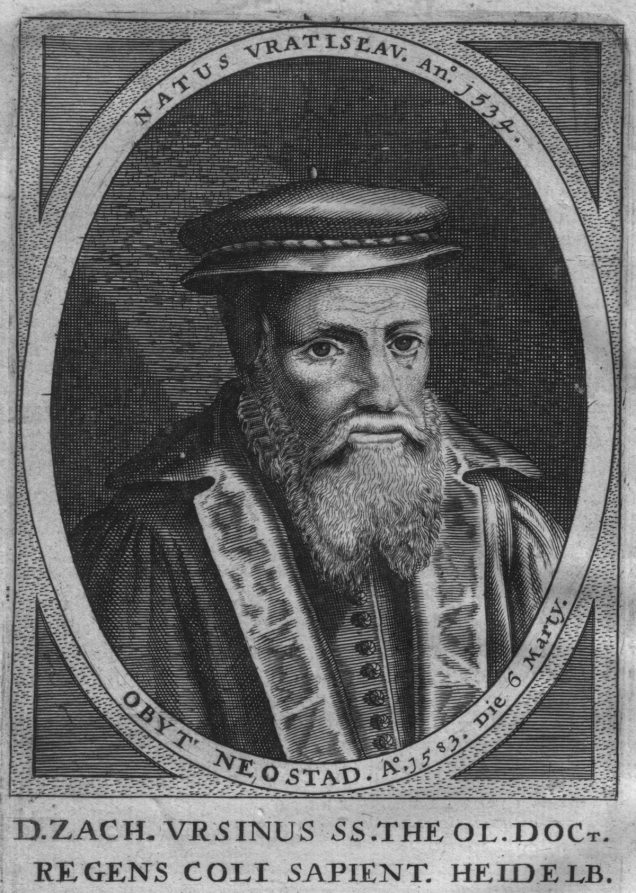
1200px-Zacharias_Ursinus

Are all men, then, saved by Christ as they have perished in Adam?

No; only such as by true faith are engrafted into Him, and receive all His benefits. (Heidelberg Catechism Q/A 20)

There has been much debate in Reformed Christendom over the last few decades over the nature of our Union with Christ, especially as it relates to the ordo and historia salutis. I have no intention here to rehearse the debate, nor even to definitively pick a side, especially given the overlap and fuzziness of the multiple positions. It would appear, in brief, that the most exercised combatants in this debate are either those who style themselves defenders of Justification by Faith alone contra those who would have vital, mystical, or existential Union with Christ as the source of faith, justification, and regeneration (the supposed error of Norman Shepherd), and those on the other hand who see themselves as defending the central role of Union with Christ against those who would reduce Christianity to a religion of Justification by Faith, with multiple Christ Unions accounting for the various benefits of salvation, each following upon the other in tidy Reformed ordo fashion (the supposed “Lutheran” position).

In this post and the next, it is rather my intention to simply see where my Confessions stand on the topic of Union with Christ, especially the Heidelberg Catechism, which has the most to say about it. In particular, Q/A 20 (above) speaks to the issue in a straightforward manner. So, in this present post, I intend to break down each phrase of the answer, fleshing out the intended meaning by looking to the rest of the Catechism and consulting the writing of its author(s), Zacharias Ursinus and (possibly) Caspar Olevianus. Most attention will be payed to Ursinus’ Commentary on the Heidelberg Catechism (CHC), an invaluable window into the mind of the Catechism’s primary author.

Continue reading

Christ, the Purpose of the Law

one-way-sign-845356-wallpaper

The law was […] offered to fallen man in order that, lacking all faculty of fulfilling the law, he may fulfill it through Christ.

Therefore, the promulgation of the law to Israel on Mount Sinai was a very gracious act. (Johannes Wollebius, Compendium Theologiae Christinae, p. 76)

Throughout this series we have been answering the question from which we began, “how was Christ administered to the saints of the Old Testament?”  We have shown that Christ was administered and dispensed by means of the Land and Seed promises, the ordained Sacrifices, the Sacrament of Circumcision, and we have for the last couple of posts been discussing the Law itself as part of the administration and dispensation of the one redemptive work of Christ to the saints of the Old Testament.

Contrary to the assumption of many, the Law was not simply a ministration of death (2 Cor. 3:7), that which slew Paul (Rom. 7:9), the sting of death (1 Cor. 15:56), etc., but was rather a very gracious act of God—a redeeming act of God—Christ Himself promulgating the Law to His own people from Mt. Sinai, carrying them on eagle’s wings through the Wilderness, and in the Law displaying His own perfect and most desirable character.  As we discussed last time, the Law became death to apostate Jews, not because it was not holy, righteous, and good in itself, but because we are fallen and evil by nature.  What the Jews had failed to see was the purpose of the Law, preferring in the pride of their uncircumcised hearts to “do this and live,” rather than believe in their hearts and confess with their mouths the faith that was by it brought near.

Continue reading

Some Quick Reminders of what TULIP is NOT

Tulip Exposures, J. Wehtje X-ray Black and White Flowers 16x20 Print 1

The doctrines summarized by the acronym “TULIP” have become to many the hallmark doctrines of the Reformed faith, even called the “Five Points of Calvinism” by some. In reality, this acronym is rarely heard in Reformed churches or found in Reformed literature.  To the Reformed, Total Depravity, Unconditional Election, Limited Atonement, Irresistible Grace, and Perseverance of the Saints are not the core of Christianity, nor even the core soteriology of Christianity, but rather five doctrinal clarifications produced by the Synod of Dordt in response to a group of Dutch ministers questioning important suppositions of the Heidelberg Catechism. While they are indeed very important truths, they do not eclipse the total system of doctrine as received in the Reformed Confessions.

But, as pervasive as this caricature of the Reformed Faith is, even more troubling is that these doctrines themselves are often presented as but poor caricatures of the actual Canons produced at Dordt—even by many who claim to profess them. I have thought it helpful here to write a few quick reminders of what TULIP is not, historically speaking.

Continue reading

Christ, the Content of the Law

10-commandments-2512765

“The law was a schoolmaster unto Christ” (Gal. 3:24) and contained “the shadow of things to come” (Heb. 10:1), whose body and express image is in Christ. (Francis Turretin, Elenctic Theology, Bk. 2, p. 226)

In our endeavor to show how the one redemptive work of Christ was administered or dispensed to the saints of the Old Testament, we have shown that the Law of God, including the Ten Commandments, was no exception.  In our last post, we have shown from the Scriptures that Christ Himself was He Who promulgated the Law from Mt. Sinai.  Here we will show that not only was He the giver of the Law, but also the very content and substance that the Moral Law of God imaged and pictured.

Continue reading

Christ, the Giver of the Law

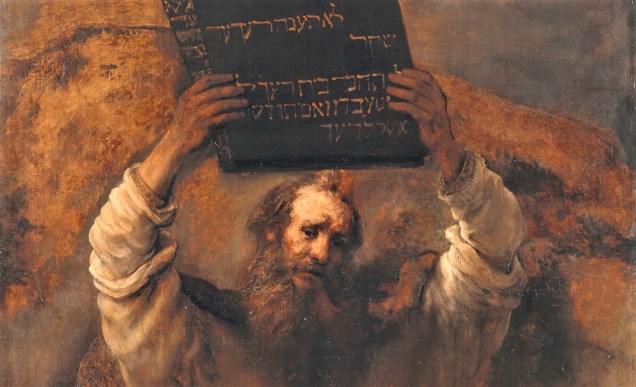
Giving-of-the-Law 3

He who is the foundation of the covenant of grace, held also the highest rank in the giving of the law. (Calvin on Galatians 3:19)

As we continue our study of how Christ was administered to the Saints in the Old Testament, we move now to the Law of God.  We have so far discussed the Seed, the Land, Circumcision, and the Sacrificial System, all of which were shown to be “for that time, sufficient and efficacious, through the operation of the Spirit, to instruct and build up the elect in faith in the promised Messiah, by whom they had full remission of sins, and eternal salvation” (The Westminster Confession of Faith, Ch. 7.5). Of course, each of these are included in God’s Law as broadly defined, so we have done much of our work already.

But I would here like to begin a study of how even the moral aspect of the Law, the very “handwriting that was against us” (Col. 2:14), including the Ten Commandments, was also integral to the administration of the one redemptive work of our Lord Jesus Christ. Of course, this administration can be seen most clearly in the Sacrificial system and the many promises, but I believe it can also be shown that the Whole Law of God was part of the sufficiency and efficaciousness of Christ’s redeeming work in the Old Testament.  After all, that is the underlying thesis of this whole series—that Christ’s work was dispensed by means of the Old Covenant, not in spite of it.

Continue reading

Former Benedictine Monk Reflects Upon Rod Dreher’s “The Benedict Option”

Entrance Ganagobie Abbey Benedictine Portal

“As someone whom God has graciously lifted out of the prison that is the Catholic sacramental system, I do not greatly appreciate this attempt to sell my bondage back to me as an uplifting spiritual experience.”


[The following is a guest post by David Bancz, a Welshman and former Benedictine monk. The post, while quite self-explanatory, is primarily a reflection on Rod Dreher’s book The Benedict Option, but is also a beautiful contrast to the series of posts by Paul Liberati earlier this year, “Reformed Seminarian Converts to Roman Catholicism”. Lord willing, Paul will have his own forthcoming reflections on this wonderful example of God’s grace on behalf of His Children.]

What should repentance look like? In particular, what should repentance from a system of false belief look like? I ask because for roughly 20 years I was not only an enthusiastic Roman Catholic, but one who was convinced that he had a vocation in the Church. In 2006 I joined a Benedictine monastery in the UK and progressed through the various levels of formation and vows. Purely by the gracious action of God, I was liberated from the cloister in 2014 and was consequently freed from the Roman sacramental system. I currently worship in a church that is part of the Evangelical Presbyterian Church of England and Wales.

Continue reading

How Christ was Administered: Sacrifices

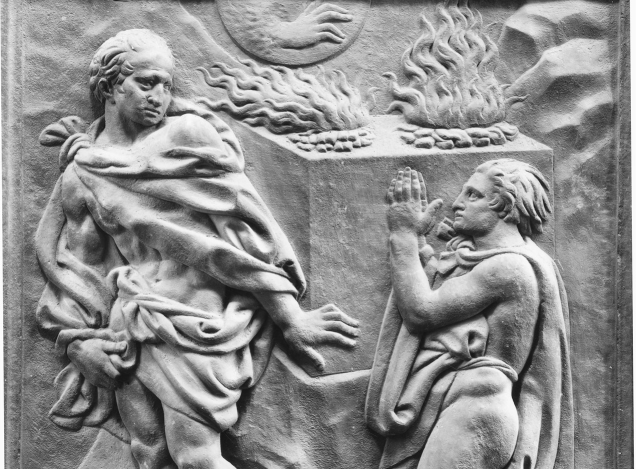
Abel and Cain

[This post is a continuation of the series beginning with, “How was Christ Administered in the Old Testament? Introduction“.]

For the life of the flesh is in the blood, and I have given it for you on the altar to make atonement for your souls, for it is the blood that makes atonement by the life. (Leviticus 17:11)

All orthodox believers understand that the sacrifices of the Old Testament were typical of the one vicarious, life for life, substitutionary sacrifice of our Lord Jesus Christ. Christ is called the Lamb of God that takes away the sins of the world (Jn. 1:29), the Pascal Lamb (1 Cor. 5:7), the Sacrifice of Atonement (1 Jn. 2:2), and He who “gave Himself up for us, an offering of sacrifice to God for an odor of a sweet smell” (Eph. 5:2).  This should not be disputed.  But how were these ancient animal sacrifices “sufficient and efficacious, through the operation of the Spirit, to instruct and build up the elect in faith in the promised Messiah, by whom they had full remission of sins, and eternal salvation” (Westminster Confession of Faith, CH. 8.6)? A short perusal of the Book of Hebrews will help make this plain.

Continue reading